Technical Article
Fresh Meat Strip Pet Treat Drying: Thickness, Airflow and Cooling
Fresh meat strip pet treats can look simple, but their drying process is highly sensitive to product geometry and moisture behavior. A strip that is too wet after drying may soften in the bag or show inconsistent texture. A strip that is dried too aggressively may become brittle, darken excessively or lose the product appearance the brand expects.
The answer is not one fixed temperature or one universal drying time. Stable production comes from matching strip thickness, loading pattern, airflow, residence time, cooling and packing conditions to the real product.
1. Strip thickness creates the first process limit
Fresh meat strips do not dry from the surface and centre at the same speed. A thin, uniform strip releases moisture differently from a thick, irregular or folded piece. If pieces vary substantially in thickness, one part of the batch can become overdried while another still retains excess internal moisture.
For this reason, product dimensions should be defined before an oven proposal is finalized. The supplier needs representative samples or clear information about strip width, thickness, length, recipe characteristics and the intended finished texture. Product dimensions are not a minor production detail; they determine the heat-transfer path and the practical residence time.
2. Loading pattern affects airflow through the product
Even a well-designed drying oven cannot compensate for poor product distribution. When strips overlap, curl together or form a heavy bed on the conveyor, circulating air cannot reach every piece equally. The upper surface may dry quickly while areas below remain warm or moist.
A practical production setup considers belt loading, spacing, material transfer and the way the product enters the first drying zone. The goal is a repeatable product layer, not the maximum possible material piled onto the belt. That is especially important when the line output changes between products or when operators adjust loading to catch up with upstream production.
3. Airflow and moisture removal must work together
Drying requires more than heat. Conditioned air must reach the product, absorb moisture and then be removed from the chamber in a controlled way. If humid air is not exhausted effectively, the product can remain in a saturated environment even when the displayed temperature appears high.
For meat-based treats, airflow should be selected around product shape, loading depth and the desired surface condition. Excessively harsh airflow can disturb light pieces or dry the outside too quickly. Weak or uneven airflow can create moisture variation from one side of the conveyor to the other. The useful target is stable product condition across the full belt width and through the whole production run.
4. Multi-zone drying creates a more controllable product path
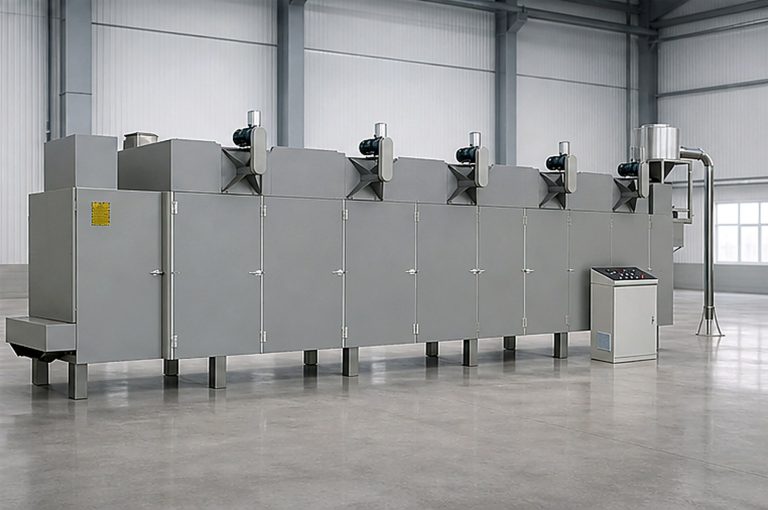
A multi-zone hot-air drying oven gives the production team more control than a single undifferentiated heating chamber. The product can pass through stages that are adjusted for early moisture removal, continued drying and final conditioning before cooling.
The exact zone settings must be established through product trials. They depend on the recipe, strip dimensions, initial moisture, loading and required output. Copying settings from a different pet treat product may create inconsistent results rather than a reliable starting point.
5. Cooling and packing protect the work done in the oven
Drying is not complete when the product leaves the oven. If warm strips are sent directly to packing, residual heat and moisture can affect the finished texture inside the bag. Cooling should be matched to the product temperature, ambient conditions and packing speed so the product reaches the packaging stage in a stable condition.
Quality checks should look at more than one good-looking sample. Production teams should compare appearance, texture, moisture consistency, breakage and package condition across samples taken from different positions and times in the run. This gives a more useful picture of whether the process is stable enough for normal production.
6. When to consider microwave processing
For suitable products, a microwave processing system can provide rapid internal energy transfer and controlled processing time. It should be selected from product trials and the required process outcome, not assumed to replace conventional airflow drying in every case.
In some projects, microwave equipment may be evaluated as part of a broader drying or finishing route. The correct scope depends on the product, production capacity, available utilities, quality target and the factory’s overall material-handling and packing arrangement.
7. Define the acceptance standard before selecting equipment
Before a pet treat drying project is quoted, the buyer and supplier should agree on the product information and the conditions used for evaluation. Useful inputs include product samples, dimensions, recipe or ingredient information, initial and final moisture expectations, target output, planned working hours, available heat source, workshop layout and packaging method.
Acceptance should be based on the agreed product and process conditions, not only on whether conveyors and fans are running. A useful factory test considers product appearance, handling behavior, moisture consistency, practical output and the way the equipment connects to cooling and packing.
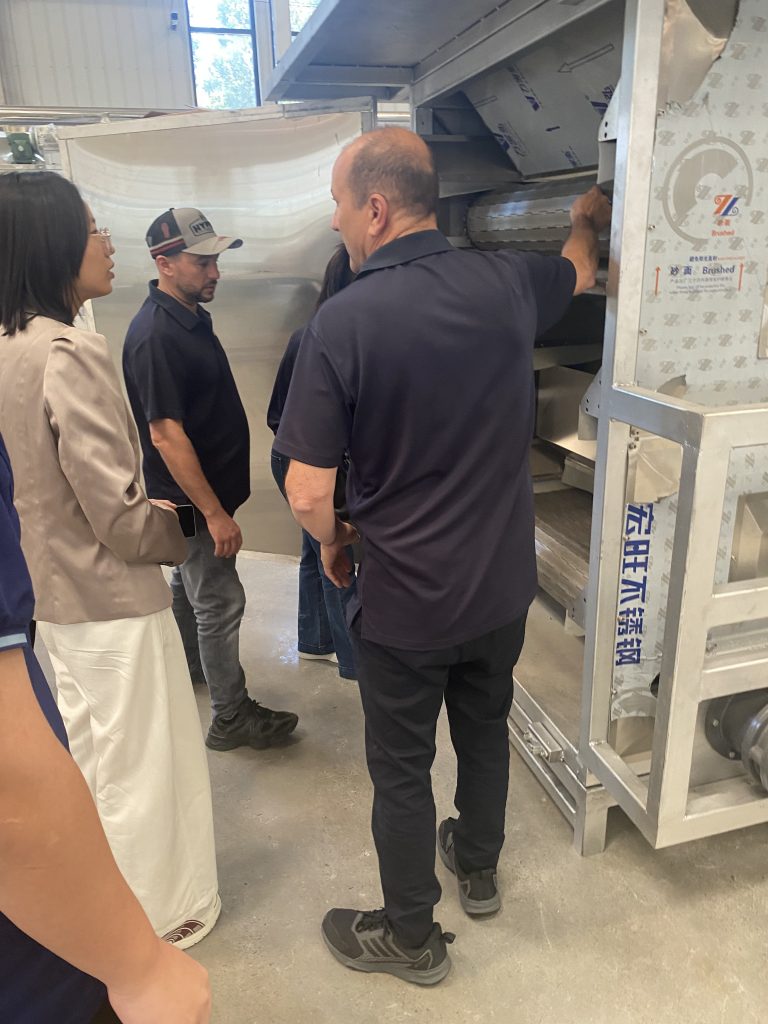
During a recent factory visit by an Australian team, ZEKO discussed these same process questions while reviewing hot-air and microwave options for fresh meat strip pet treats. The right equipment proposal begins with a clear understanding of the product path.
Conclusion
Fresh meat strip pet treat drying is a process-design question, not simply an oven selection question. Strip thickness, loading, airflow, moisture removal, zone control, cooling and packing all affect whether the final product is consistent and saleable. When those conditions are defined early, the drying system can be matched to the real factory requirement rather than a generic capacity figure.
If you are planning a fresh meat strip pet treat project, send ZEKO your product samples or reference information, target output, available utilities and workshop conditions. We can help review the drying and processing scope around the actual product.
Continue Reading