Fortified Rice Extrusion
Artificial Rice Production Line
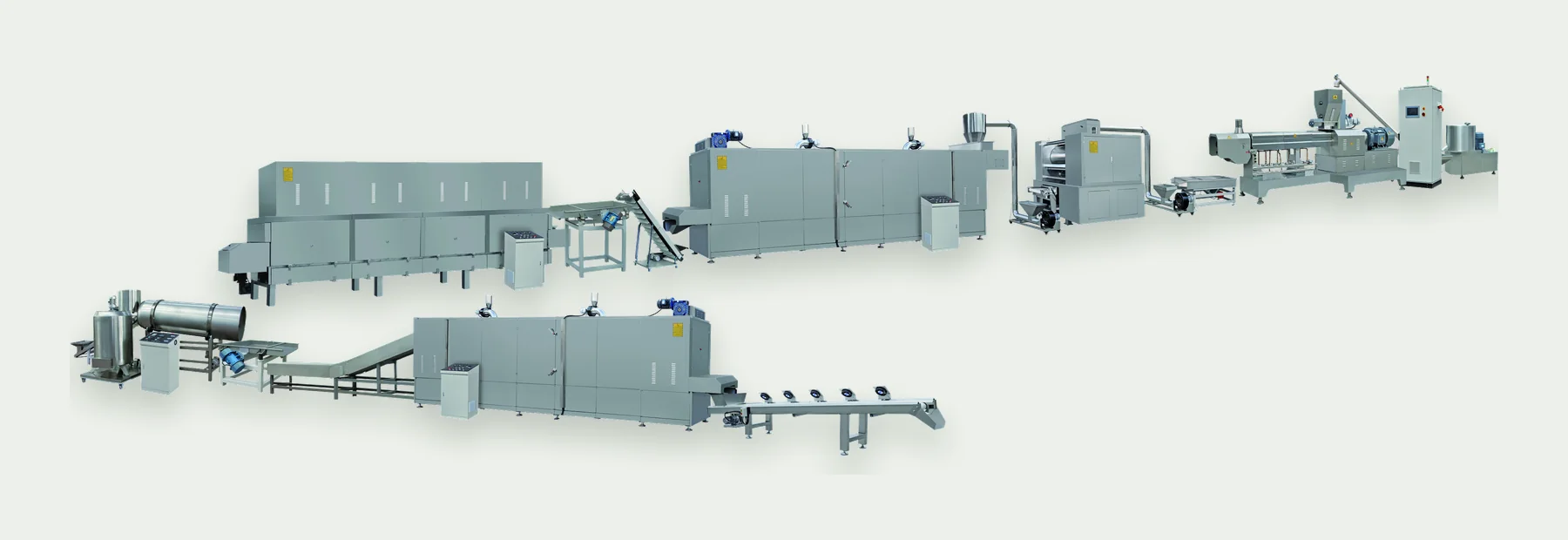
An extrusion line for producing reconstituted or fortified rice grains from rice flour, broken-rice flour and other approved formula ingredients. The process combines blending, controlled extrusion, rice-grain shaping, drying and cooling.
Models And Reference Capacity
The extruder establishes the main output range. Drying, coating, milling, cooling and packing equipment must be sized around the same product load.
| ZEKO configuration | Reference output |
|---|---|
| ZK-70 | Approx. 100 kg/h |
| ZK-75 | Approx. 300 kg/h |
Reference output varies with flour preparation, added nutrients or other ingredients, target grain size, drying conditions and final moisture. The buyer is responsible for validating the nutritional formula and local food requirements.
Products This Line Can Support
Finished-product requirements guide the formula discussion, die tooling, process stages and downstream configuration.
Production Process
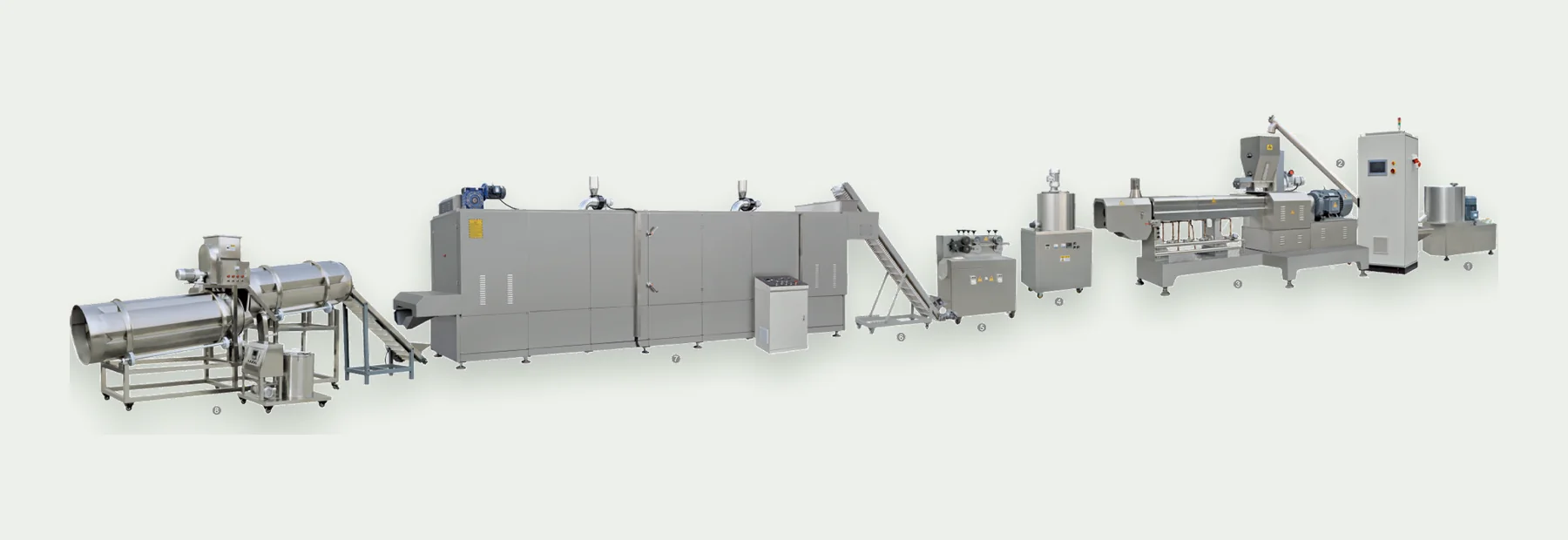
A practical process flow for project discussion. Individual stages are adjusted according to formula, product quality and factory utilities.
Equipment Scope And Configuration
A useful quotation separates the required process from optional automation and packing equipment.
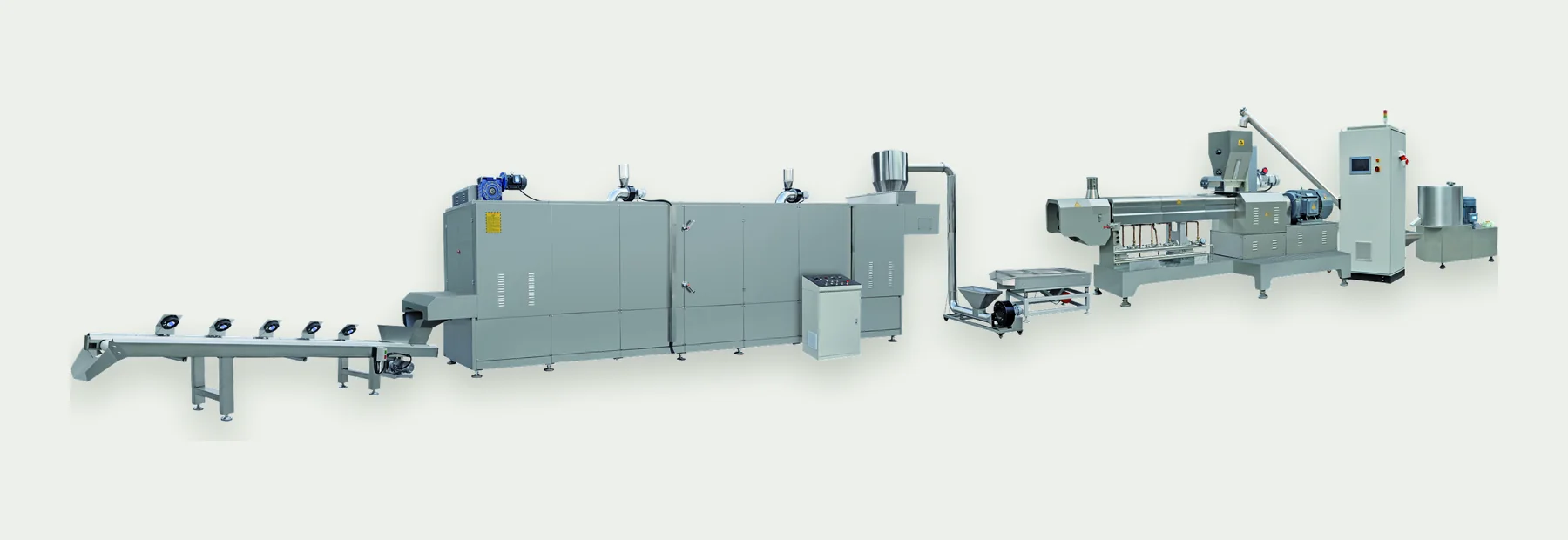
Typical Equipment Scope
- Powder mixer and dosing equipment
- Screw conveyor or feeder
- ZK twin-screw extruder
- Rice-grain shaping die and cutter
- Multi-layer drying oven
- Cooling, screening and packing connection
Important Project Decisions
- Flour particle size and premix uniformity affect extrusion stability and grain consistency.
- Die design and cutter settings determine rice-grain length and shape.
- Drying must control cracking, deformation and final storage moisture.
- Nutrient additions and claims must be validated by the buyer for the destination market.
Information Needed For Quotation
Send these details so ZEKO can select the process, output platform, utilities and workshop layout without relying on a generic equipment list.
- Target rice-grain photos and dimensions
- Main flour ingredients and approved premix information
- Required hourly capacity
- Initial and target final moisture
- Voltage, heat source and workshop size
Technical Planning Resources
Use these buyer-focused guides to compare capacity, equipment boundaries, factory requirements and acceptance conditions before requesting a proposal.
Extruder or Complete Production Line?
Define the equipment boundary, utilities, downstream drying and acceptance scope before comparing offers.
Read guide →Buyer guideFood Extrusion Line Capacity Planning
Translate the required finished-rice output into matched extrusion, drying, cooling and screening capacity.
Read guide →Buyer guideFood Machinery Quotation Checklist
Prepare formula categories, product specification, factory utilities, line boundary and commercial requirements.
Read guide →Artificial Rice Production Line FAQ
Practical answers about products, capacity and line configuration.
What is artificial or fortified rice?
It is a rice-shaped product formed by extrusion from prepared flour and an approved formula. The final composition and nutritional claims depend on the buyer formula.
Which ZEKO configurations are available?
The reference equipment schedule lists ZK-70 at approximately 100 kg/h and ZK-75 at approximately 300 kg/h.
Can grain shape and size be adjusted?
Yes. Die geometry and cutter settings are selected around the target rice-grain length, thickness and appearance.
Which ingredients can be used?
Rice flour and broken-rice flour are common bases. Other grains or approved premix ingredients can be evaluated after the buyer provides the formula categories.
What information is required for line selection?
Provide the ingredients, target grain size, output, moisture requirement, voltage, heat source and workshop dimensions.
Related Production Lines
Compare other production routes based on your intended product, process and capacity.
Discuss Your Product With ZEKO
Send the target product, ingredients, hourly output, voltage and workshop dimensions. We will match the process and equipment configuration to the project.