Technical Article
Direct-Expanded vs Fried Pellet Snacks: Choosing the Right Product Route
Choosing between a direct-expanded snack line and a fried pellet snack line is not simply a question of which machine costs less. It is a decision about the product family you want to sell, the factory systems you are prepared to operate, and the risks you are willing to carry after commissioning.
Both routes can make commercially successful snacks. But they create different textures, need different downstream systems and place different demands on production, maintenance, quality control and packaging. A quotation only becomes useful after the product route is defined.
1. Start with the product promise, not the extruder model
Direct-expanded snacks are formed and expanded as they leave the extruder die. Corn puffs, rings, curls and shaped cereal snacks are common examples. The process is continuous: raw-material preparation, extrusion, cutting, drying or seasoning, cooling and packing must work as one system.
Fried pellet snacks begin with a dense, shaped pellet. The pellet is normally produced, dried or conditioned, then expanded in hot oil before seasoning and packing. This route is often chosen when the market expects a particular crispness, dense bite, three-dimensional shape or familiar fried-snack character.
For a project owner, the key question is not which route can make snacks? Both can. The useful question is: what eating experience, price point and shelf position must the finished product deliver?
- Choose a direct-expanded route when the brief calls for efficient continuous production of puffs or shaped snacks with a clear extrusion identity.
- Consider a fried-pellet route when the intended product depends on pellet geometry, a fried surface character or a texture that direct expansion cannot reliably reproduce.
- Do not copy a competitor’s process only because its product looks similar. Confirm the target texture, oil level, pack format and retail price before selecting equipment.
2. The line architecture is fundamentally different
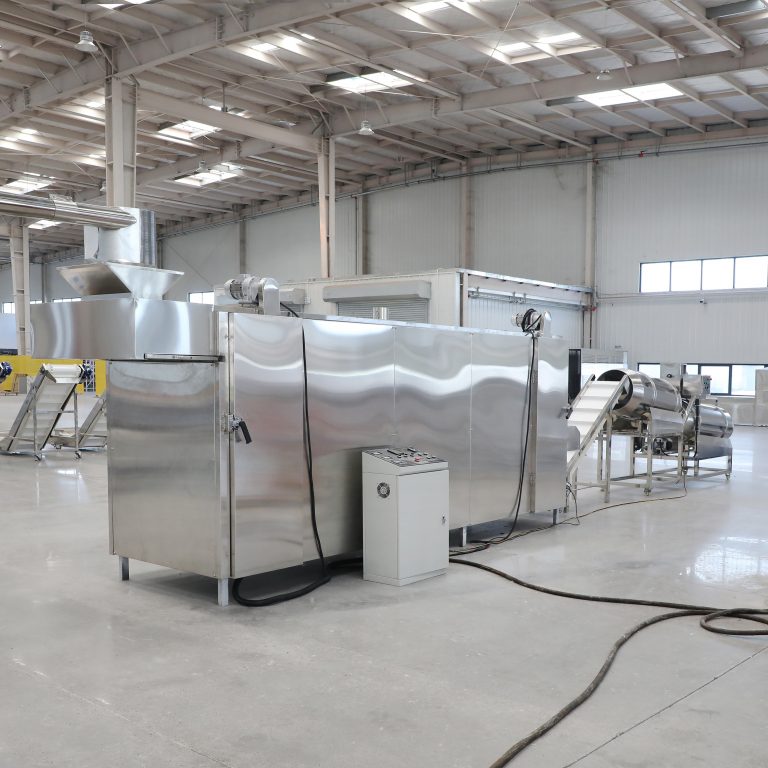
For a direct-expanded product that needs a controlled non-fried finish, see our hot-air expanded snack production guide. The oven is not a simple accessory: its airflow, product loading and residence time must stabilize the snack texture at the actual extrusion rate.
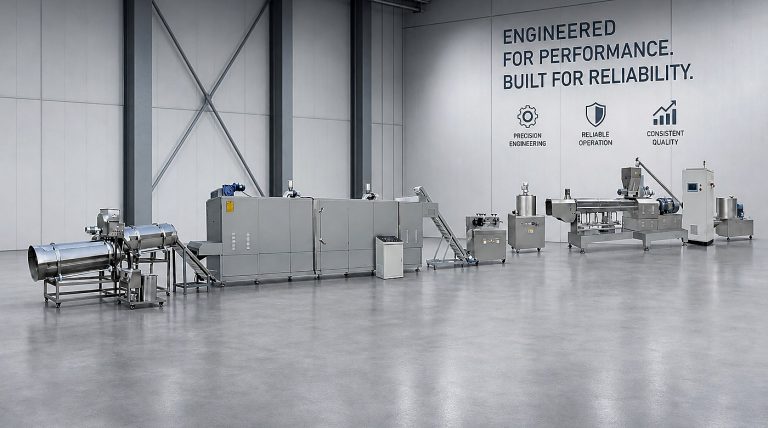
A direct-expanded line is usually centered on the extruder. The extruder controls cooking, pressure, moisture reduction and expansion. The downstream equipment must protect the expanded product: gentle conveying, stable drying or cooling, seasoning control and packaging that preserves crispness.
A fried-pellet project adds a separate thermal and oil-management system. The fryer is not just another module. It introduces oil heating, filtration, circulation, extraction, fire-safety planning, oil handling and a different cleaning routine. These systems can be well managed, but they must be included in the original project scope rather than treated as later accessories.
The practical implication is simple: a direct-expanded line concentrates more process sensitivity around formulation, extrusion and drying; a fried-pellet line adds operating discipline around frying conditions, oil quality and post-fry handling.
3. Compare saleable output, not nameplate capacity
Many investment mistakes begin with a capacity figure that is too vague. 500 kg/h may refer to extruder throughput, wet pellet output, fryer output or finished packed product. Those are not the same number.
For a real comparison, define capacity at the point that matters to the business:
- finished product after drying or frying;
- after seasoning and breakage losses;
- at the moisture specification required for packing;
- and at the pack size the sales team will actually sell.
Ask every supplier to state the capacity basis in writing. A useful proposal should show the assumed raw material, target moisture, product shape, runtime, scrap allowance and package format. If those assumptions are missing, two quotations with the same headline capacity cannot be compared fairly.
For direct-expanded snacks, the constraint may be drying time, seasoning coverage or cooling before packing. For pellet snacks, it may be frying residence time, oil temperature recovery, pellet consistency or the packing room’s ability to handle warm, fragile product. The bottleneck is often downstream of the machine that appears in the brochure.
4. Factory utilities change the investment decision
Direct-expanded and fried-pellet projects both need reliable electrical power, compressed air, water where the formulation requires it, ventilation, food-safe drainage and appropriate packing-room conditions. But the balance of those requirements is different.
A fried-pellet project needs a serious early review of thermal energy, exhaust, oil storage and safety procedures. The fryer area must be planned as an operating system, not squeezed into leftover floor space. Cleaning access, oil filtration and product transfer after frying all deserve layout drawings before equipment is ordered.
A direct-expanded project shifts more attention to ingredient handling, extrusion stability and product drying. It is often perceived as simpler because there is no fryer, but this does not remove the need for careful control. Small variations in raw-material condition, moisture or die configuration can change the final texture and bulk density.
Before requesting final quotations, prepare a one-page utility brief: available power, fuel or thermal source, compressed-air pressure, water quality, drain locations, ceiling height, loading access and the space reserved for packaging and finished goods. This brief prevents expensive redesign after the purchase order.
5. Quality control must match the chosen route
For both routes, product quality starts with a measurable product specification. Agree on the finished shape, dimensions, appearance, texture, moisture range, seasoning coverage, breakage limit and package weight before the line is accepted.
Direct-expanded products require repeatable control of expansion, density and crispness. Fried pellets require repeatable control of expansion, oil pickup, colour and surface texture. The exact tests vary by product, but the principle is the same: do not accept a line only because it runs for a few minutes.
A strong Factory Acceptance Test should include stable operation using agreed raw materials, a defined run duration, documented measurements, a record of product rejects and a list of unresolved items. Our food production line FAT checklist explains the management side of that process in more detail.
6. Use a stage-gate decision before you buy
Factory owners can reduce risk by making the route decision in four stages:
- Market fit: Confirm the snack format, target customer, price position and expected texture.
- Process fit: Test whether direct expansion or pellet frying can produce that result consistently with available ingredients.
- Factory fit: Check utilities, layout, labour, cleaning and safety requirements.
- Commercial fit: Compare saleable output, packaging needs, operating inputs, maintenance exposure and project scope – not only the equipment price.
If one of these stages is unclear, do not force a machine selection. A limited product trial, technical discussion or layout review is cheaper than building a line around an untested assumption.
7. What to put in your RFQ
A supplier can provide a much better proposal when the RFQ includes the product route, planned capacity basis, product samples or drawings, raw materials, available utilities, site dimensions, packaging format and required certifications. It should also state whether the scope must include seasoning, drying, frying, oil filtration, cooling, metal detection, packing or only the core process.
For a broader owner-level checklist before comparing individual machines, see our puffed snack project entry guide. If you already have a product target and capacity in mind, send us a production-line proposal request with your basic project data.
Conclusion
Direct-expanded snacks and fried pellet snacks are both valid routes, but they are not interchangeable. The right choice follows the product promise, the operating system your factory can support and the level of process control required to make saleable product every day. Decide that first; then compare equipment around a defined, measurable scope.
Continue Reading