Technical Article
Can One Line Make Breakfast Cereal and Center-Filled Snacks?
A cereal ring, a cereal ball and a center-filled pillow may all begin with a grain-based recipe, but they should not be treated as the same project.
When an early project inquiry includes several product types, I do not begin by choosing an extruder model. First, I want to know which finished products must run reliably on the line. The answer changes the die, cutting, filling, drying, cooling and coating scope.
Start with the finished products
For a breakfast cereal project, the target range may include rings, balls, flakes or shaped cereal pieces. A center-filled snack project may involve pillows, sticks or shells with a sweet, savoury or cream-based filling.
Before discussing equipment, confirm a few practical points:
- Which shapes need to run on the same line?
- Is filling required for every product or only selected products?
- Is the target a crisp cereal, a porous snack or a denser filled product?
- Will the product be plain, sugar-coated, chocolate-coated or seasoned?
- What saleable output is required for each product?
A line can be flexible, but it cannot ignore the differences between products.
What can usually be shared
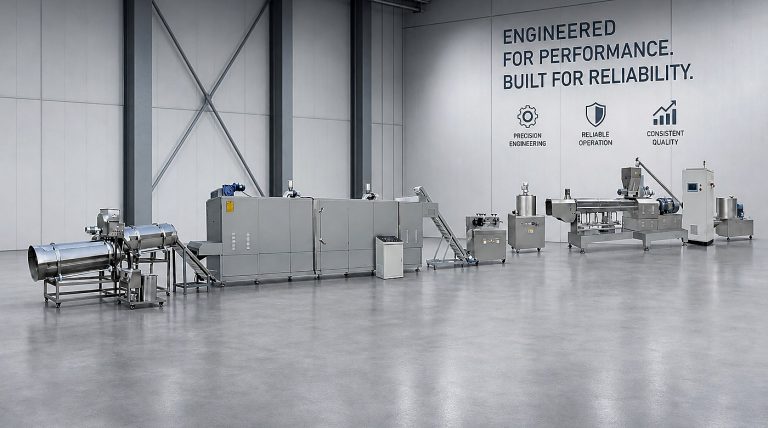
Several process sections can often serve both cereal and filled-snack production: raw-material handling, batching, mixing, feeding, twin-screw extrusion, selected conveying sections and, in some cases, packing support. Shared equipment can reduce duplicated investment and simplify workshop planning.
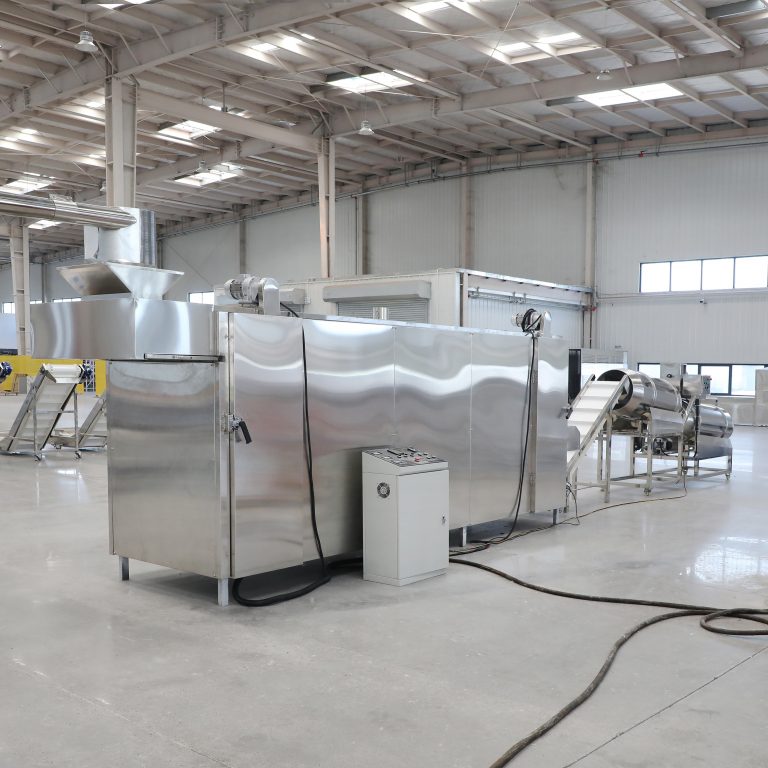
The Breakfast Cereal Production Line is configured around cereal shape, texture, drying and optional coating. The Center-Filled Snack Production Line adds the process control needed to manage filling, shell formation and product integrity.
Where the process must change
The major differences usually appear at and after the extruder. For a standard cereal ring or ball, die design, cutter operation and drying conditions are selected to achieve the required shape and crispness. For a center-filled product, the co-extrusion section must create a stable outer shell around the filling. Filling consistency, die arrangement and the balance between the shell and core become much more important.
Drying should not be selected from extruder capacity alone. A filled product may need a different moisture target, residence time or airflow profile from a plain cereal shape. If coating is required, the cooling and coating sequence must be included before selecting the final dryer and conveyor arrangement.
That is why a production line should be configured around the full product route, not around one machine nameplate.
Define capacity product by product
A request for “500 kg/h” is a useful starting point, but it is not enough by itself. The project discussion should clarify whether the number refers to extruder discharge, dried product, coated product or packed saleable output.
A line that makes several products may have different practical outputs for each shape because die size, moisture removal, filling ratio and downstream handling are different. A stronger project brief includes product photos or samples, formula direction, filling type, product dimensions, target output for each product, workshop space, utilities, coating requirements and local voltage.
Plan flexibility before ordering
A flexible cereal and snack line is possible when flexibility is planned from the start. Depending on the intended range, this can include interchangeable dies, suitable cutting arrangements, filling interfaces, adjustable drying conditions and enough space in the layout for future coating or packing changes.
The best opening question is not “Which machine do I need?” It is “Which finished products must this line make reliably?” Once that is clear, the process scope becomes much easier to define.
If you are planning cereal products, filled snacks or both, send ZEKO your target products, capacity and factory conditions. We can help identify which sections can be shared and which equipment should be configured specifically for your project.
Continue Reading