Technical Article
Fish Feed vs Shrimp Feed Production Line: 6 Process Differences Before You Specify Equipment
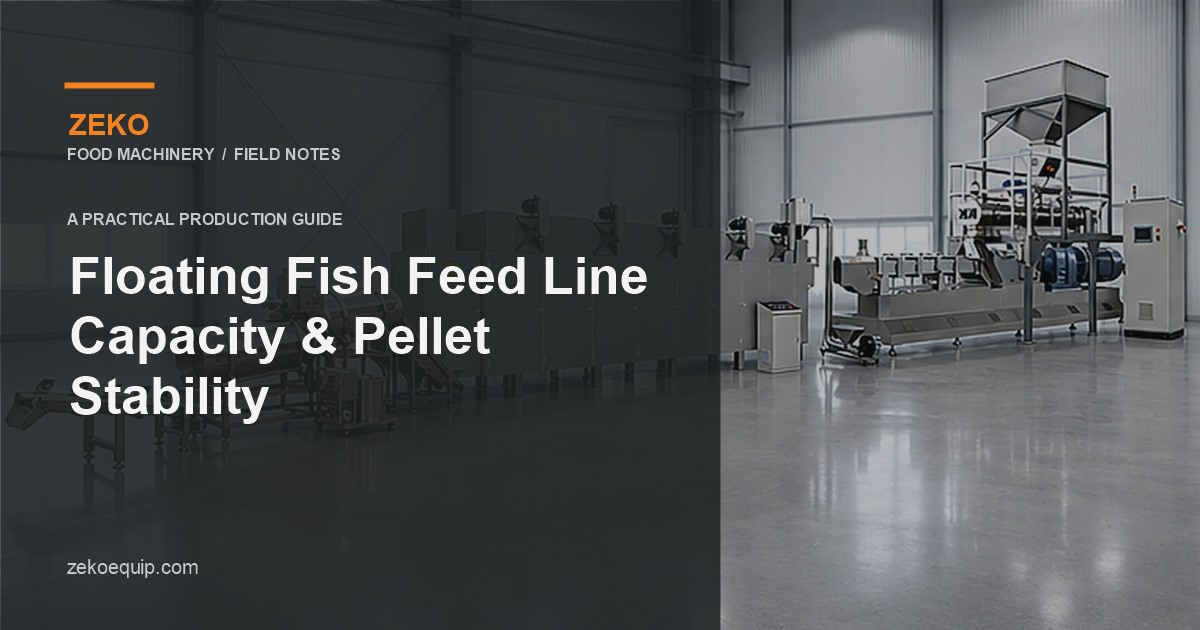
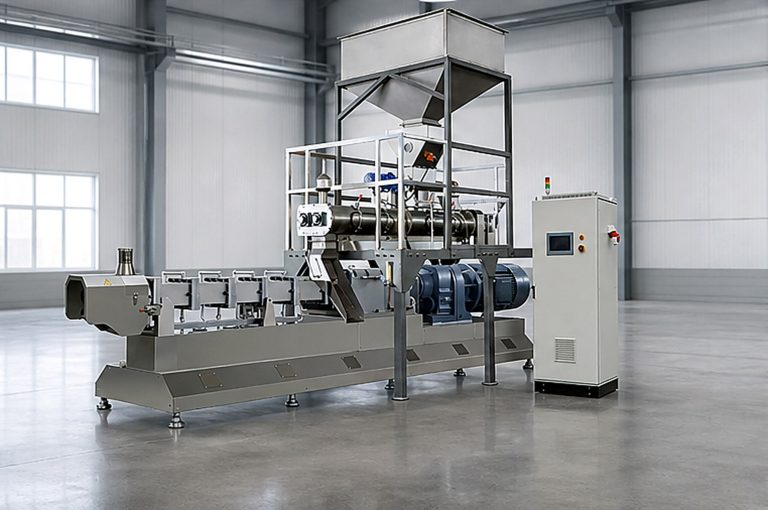
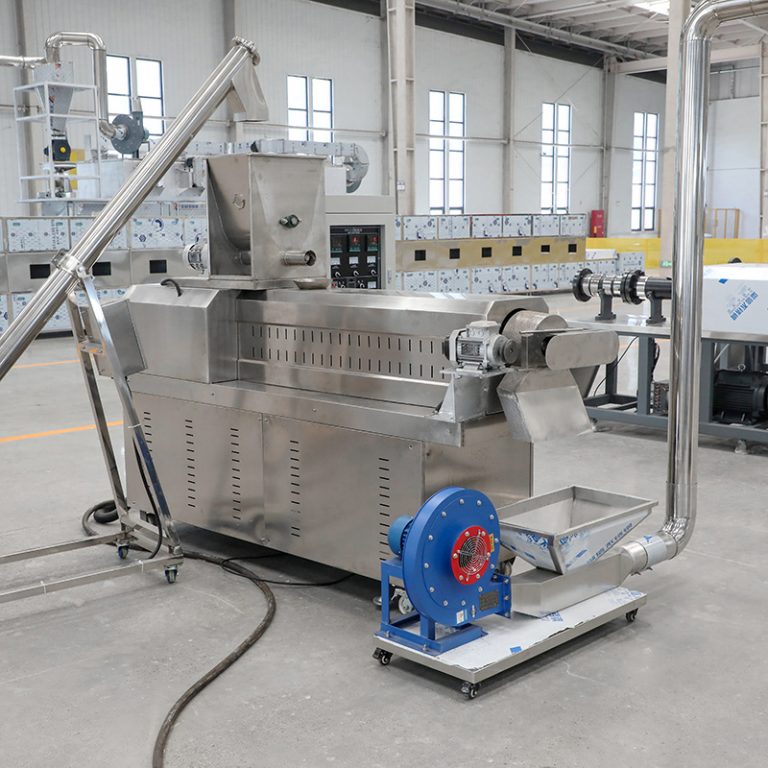
A fish feed line and a shrimp feed line may share equipment such as grinding, mixing, extrusion, drying, cooling and packing. They should not be specified as the same project. The finished pellet behaves differently in water, the target density is different, and the process window can change with the formula, pellet diameter and water-stability requirement.
Before comparing an extruder quotation, define the end product first. This guide explains the practical differences buyers should clarify before selecting an aquatic feed production line.
1. Start with the target species and pellet behaviour
The first decision is not the extruder model. It is the product specification: fish species or shrimp, life stage, pellet diameter, target density, floating or sinking behaviour, feeding environment and expected water stability.
Many fish-feed projects require floating, slow-sinking or sinking pellets depending on species and feeding practice. Shrimp feed is commonly specified as sinking feed with controlled water stability, because the pellet must retain its form long enough for bottom feeding. These are product targets that guide equipment configuration; they are not interchangeable machine settings.
| Planning point | Fish feed project | Shrimp feed project |
|---|---|---|
| Pellet behaviour | May be floating, slow-sinking or sinking | Usually specified as sinking with stable water performance |
| Common pellet range | Often covers multiple sizes as fish grow | Often includes smaller diameters for juvenile and grow-out stages |
| Key quality checks | Density, floatability or sinking rate, durability and moisture | Water stability, density, pellet integrity, moisture and size consistency |
| Process focus | Expansion and density must match the target feed behaviour | Formula preparation, fine grinding and controlled density are especially important |
2. Define pellet size before selecting the die and cutter
A single fish feed pellet size is not enough for a quotation. Pellet diameter, length tolerance, die open area and cutter arrangement must be evaluated together. Small pellets can place different resistance and drying demands on the line than larger pellets, even when the nominal hourly output appears similar.
For the ZEKO aquatic-feed range, a common commercial reference band is approximately 0.8-12 mm. The final size depends on the formula, die, cutter and species target. A proposal should state the sizes it is designed to demonstrate, not merely list a broad theoretical range.
3. Formula preparation affects pellet performance before extrusion
Pellet behaviour begins with raw-material preparation. Ingredient selection, particle size, mixing quality, conditioning moisture and starch behaviour all affect density, expansion, durability and water stability. An equipment supplier cannot make every formula perform the same way simply by changing screw speed.
For a new project, provide ingredient categories and the expected formula range early. Ask the supplier which parts of the process are included: receiving, grinding, batching, mixing, preconditioning, extrusion, drying, coating, cooling, screening and packing. This prevents a quotation from comparing a complete line with an extruder-only scope.
4. Extrusion controls shape and structure; drying confirms storage stability
The extruder cooks and shapes the pellet, but a saleable product is not complete at the die. Cutting, drying, cooling and coating must work at compatible continuous capacities. If the dryer cannot remove moisture at the required residence time, the line will not achieve its intended finished output.
For floating feed, the screw configuration, moisture, temperature, die and formula work together to create the required internal structure and density. For sinking products, the process must be configured around the approved density and stability target. In both cases, final moisture and product temperature should be agreed before packing.
Read more about matching line capacity in our food extrusion line capacity planning guide.
5. Compare capacity on the same basis
1,000 kg/h does not mean much unless the product conditions are stated. Capacity should identify the formula, pellet diameter, feed behaviour, wet output, final moisture, dryer load and operating basis. Small floating pellets, sinking pellets and high-water-stability shrimp feed can produce different real outputs on the same extruder model.
Ask for the continuous bottleneck capacity of the complete process rather than only the extruder nameplate. The slowest connected section, often drying, cooling, coating or packing, sets saleable output.
6. Turn quality language into an acceptance checklist
Good pellet quality is not an acceptance criterion. Before production, agree the test methods and target ranges that matter for the product. These normally include:
- Pellet diameter and length consistency
- Bulk density or defined floating/sinking behaviour
- Water-stability observation method and duration
- Finished moisture and product temperature before packing
- Fines, breakage and durability after normal conveying
- Coating or oil-application target, where applicable
- Representative formula and material supplied for factory testing
A factory acceptance test should record the operating conditions under which the line was demonstrated. Our food production line FAT checklist can help structure that discussion before shipment.
Questions to send before requesting a fish or shrimp feed line proposal
- Target species and product type
- Floating, slow-sinking or sinking requirement
- Pellet sizes now and planned for future production
- Formula categories and expected ingredient range
- Target hourly output and working hours per day
- Final moisture, water stability and density requirements
- Available power, steam, gas, compressed air and workshop dimensions
- Required scope for coating, cooling, screening and packing
ZEKO configures complete aquatic-feed solutions around the actual product target rather than a generic machine list. Send your fish or shrimp feed project brief with the details above for a process-based recommendation.
Continue Reading