Technical Article
Single-Screw vs Twin-Screw Food Extruder: How to Choose for Snacks, Pet Food and Feed
A buyer rarely starts with a clear answer to “single-screw or twin-screw?” The better starting point is the product: its recipe, moisture range, shape, texture target, and the drying or coating steps that follow. An extruder is one part of a production line, so the right choice is the one that fits the whole process rather than the one with the longest specification sheet.
What is the practical difference?
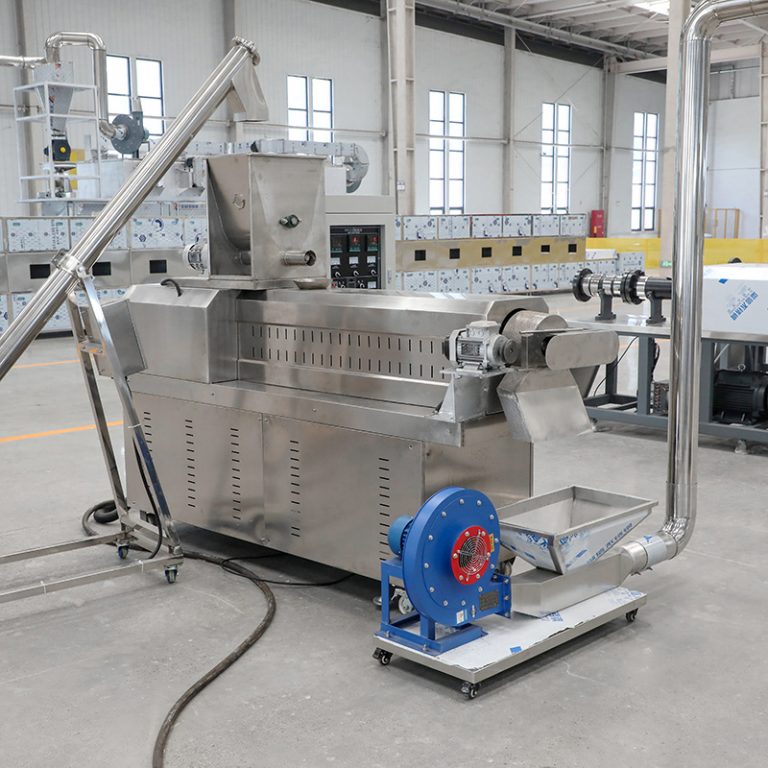
A single-screw extruder uses one rotating screw to convey and process material. It can be a sensible choice for defined, stable processes where the recipe and operating window are well understood. A twin-screw food extruder uses two intermeshing screws and generally gives the process team more options for mixing, conveying and handling formulations that need closer control.
Neither layout is automatically “better.” The decision changes with the finished product, the raw material behaviour and how much flexibility the factory needs after the first product launch.
Use the product plan before the machine name
| Planning question | Why it matters |
|---|---|
| Will the recipe change often? | Frequent changes in ingredients, moisture or product format usually make process flexibility more important. |
| Is the product directly expanded, dense, filled or coated? | Texture, die design and downstream drying are linked; the extruder cannot be selected in isolation. |
| Is this one SKU or a product family? | A line intended for several formats should be assessed for changeover, trials and supporting equipment. |
| What is the finished-product capacity? | Quote comparisons only make sense when capacity is stated on the same finished-product basis. |
| What happens after extrusion? | Drying, seasoning, coating, cooling and packing can be the real limiting steps. |
Where a single-screw route can make sense
For a clearly defined product with a stable formulation, a single-screw route may be appropriate. It can be worth evaluating where the production objective is straightforward and the downstream process is already known. The key is not to assume that the lower-complexity option will automatically suit every formula; raw material preparation, moisture and die requirements still need to be reviewed during testing.
Where twin-screw processing is often evaluated first
Twin-screw processing is commonly considered for products that need more controlled mixing and cooking, or where the factory plans to develop several products from one process platform. That is why it appears often in snack, breakfast cereal, pet food and aquatic-feed discussions. For dry pet food production, the extrusion stage should be planned together with drying, fat coating and cooling. For fish feed, pellet behaviour and the required finished format affect the selection basis from the start.
Do not compare extruders without the downstream line
Two quotations can both say “500 kg/h” and still describe very different projects. Ask whether the figure refers to wet extrudate, dried product or packed output. Then confirm the dryer, cooler, coating system, conveying and packaging scope. Our food extrusion capacity-planning guide explains the five numbers that help keep those comparisons consistent.
A practical way to prepare an enquiry
- Name the target products and send photos or samples if available.
- List the main raw materials and expected formulation range.
- State the desired finished-product capacity and operating hours.
- Describe the required shape, size, texture and whether filling or coating is involved.
- Identify the utilities available at the factory and the markets the final product will serve.
For a broader overview of the product routes that can follow extrusion, see our food extruder machine applications guide.
Frequently asked questions
Can one extruder make both snacks and pet food?
Some production platforms can be configured for different applications, but the formula, die, drying, coating and sanitation requirements must be checked product by product. A trial plan is more reliable than assuming the same configuration will suit every product.
Does twin-screw always mean higher capacity?
No. Capacity depends on the recipe, target moisture, product density, die configuration and downstream equipment. Define capacity on a finished-product basis before comparing proposals.
What should be tested before ordering?
At minimum, test the target formula or a representative material, then evaluate product appearance, texture, moisture after drying and how the product behaves through cooling and packing.
Planning a food extrusion project? Send the product, formula range and target capacity to ZEKO for a line-scope discussion.
Continue Reading