Technical Article
Hot-Air Expanded Snack Production Line: How to Design a Non-Fried Snack Process
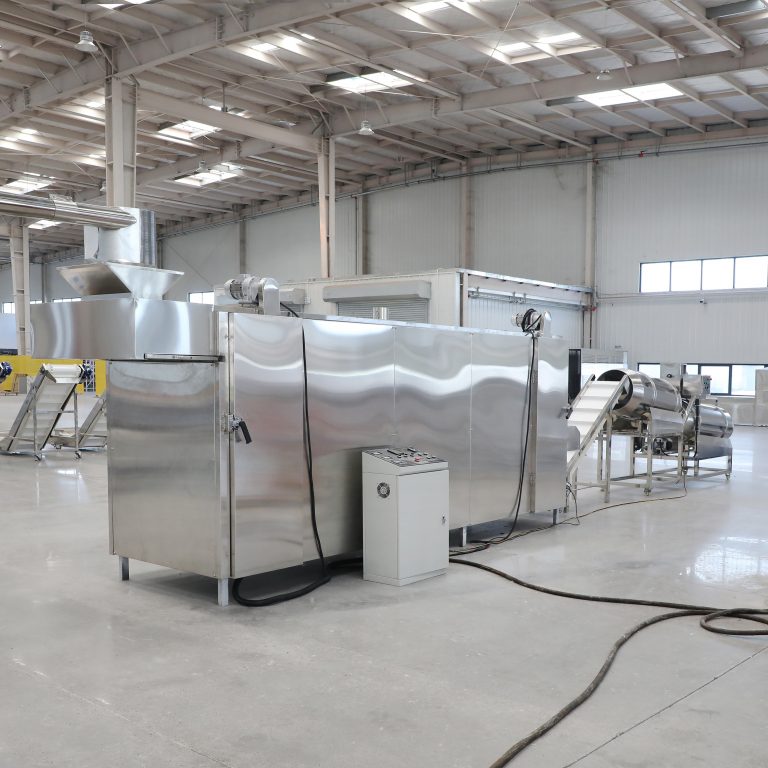
A hot-air expanded snack production line is often described as a “non-fried snack line.” That description is useful for marketing, but it is not enough for factory planning. A stable, crisp product depends on the complete chain: ingredient preparation, moisture control, extrusion, die design, hot-air drying, seasoning, cooling and moisture-proof packaging.
The practical question for a factory owner is not whether the line includes a dryer. It is whether the entire system can deliver the required saleable product: the right shape, bulk density, crispness, color, final moisture and pack-out rate—at the planned hourly output. This guide explains how to define that process before asking suppliers for a quotation.
1. Start with the product route, not the equipment list
“Expanded snack” covers different processing routes. Buyers should make this clear before selecting machinery:
- Direct-expanded snacks: flour or a blend is cooked and expanded at the extruder die, then dried, flavored, cooled and packed. Typical products include corn puffs, balls, rings, curls and cereal-style pieces.
- Pellet snacks expanded later: a dense pellet is formed first, then expanded in a frying or hot-air step. This is a different line architecture.
- Baked or toasted cereal products: the product may be extruded, dried, tempered, flaked or shaped, then toasted. The dryer and final heating stage have different duties.
For a standard non-fried corn or multigrain puff, direct expansion is usually the relevant route. The key process sections are a twin-screw food extruder, a downstream hot-air dryer, flavoring, cooling and packaging.
2. What makes a snack expand?
Inside the extruder, the blend is mixed, heated, sheared and transformed into a pressurized melt. At the die, the rapid pressure drop allows part of the water to flash into vapor. The product expands and forms a cellular structure. Expansion, bulk density, porosity, hardness and crispness are therefore connected rather than independent quality targets.
Research on expanded snacks consistently identifies formula, particle size, feed moisture, barrel temperature, screw speed, screw configuration and die geometry as linked inputs. A setting that produces a light corn puff can create a dense, hard product when protein, fiber, oil or a different starch source changes the material’s behavior. This is why nameplate extruder capacity cannot replace a product trial.
3. The four decisions that determine the line
| Decision | What must be specified | What goes wrong if it is ignored |
|---|---|---|
| Formula | Main starches, protein/fiber level, oil, sugar, inclusions and target moisture | Poor expansion, unstable feeding, excess breakage or unexpected color |
| Finished product | Shape, die size, piece weight, bulk density, texture and final moisture | A line can meet kg/h but fail the required bag volume or texture |
| Dryer duty | Incoming and final moisture, bed depth, residence time, heat source and airflow | Soft center, dark surface, bottlenecked throughput or high energy use |
| Packaging | Pack size, film barrier, bags/minute, gas flushing and case packing | Crisp snacks absorb moisture or packing stops the line |
4. Feed moisture and formulation are process settings
Feed moisture is not just a recipe number. It affects melt viscosity, mechanical energy input, die pressure and the driving force for expansion. Very low moisture can increase torque, scorching risk and process instability. Too much moisture can plasticize the melt, reduce the expansion force at the die and produce a dense snack. Published snack studies often evaluate moisture within a relatively narrow range because the best result depends on the ingredients, equipment and target texture.
High protein, fiber-rich or whole-grain formulas need special attention. They can change water binding and reduce bubble growth compared with a simple starch-rich blend. Do not promise a lightweight, highly expanded product from a high-fiber or high-protein formula until it has been trialed. The correct commercial response is to test the actual recipe, then confirm the screw elements, die, cutter, dryer and line output.
5. The hot-air dryer stabilizes the structure
Direct expansion removes part of the moisture immediately, but it normally does not finish the product. The dryer reduces remaining moisture to the level needed for texture and storage stability. At the same time, it must protect product color and avoid excessive surface hardening.
Dryer sizing should be based on water removal and residence time, not only on an extruder’s rated kilograms per hour. To prepare a useful dryer quotation, give the supplier:
- actual output of expanded pieces entering the dryer;
- measured or trial-based inlet and target final moisture;
- piece dimensions, bulk density and allowed bed depth;
- required final color, crispness and breakage limit;
- available electricity, natural gas or steam;
- local workshop height, access and exhaust conditions.
The drying stage should be matched to stable extruder output. If the extruder produces more than the dryer can finish, pieces accumulate, lose quality or force the operator to slow the entire line. If the dryer is oversized without the right airflow distribution, energy is wasted and uneven drying can still occur.
6. Cooling comes before moisture-barrier packaging
Warm product should not be sealed immediately. Cooling reduces the chance of condensation inside the pack and lets the line remove fines before weighing. Crisp expanded products are sensitive to moisture uptake after production, so packaging film and seals are part of the process specification—not a final purchasing detail.
Define the package with the production target: retail bag weight, bag style, product bulk density, film structure, expected bags per minute, date coding, metal detection, checkweighing and any gas-flush requirement. FAO processing guidance also emphasizes moisture-proof packaging for dried foods because they can reabsorb water from the surrounding air.
7. Measure the line using saleable output
The most useful capacity definition is not screw throughput. It is accepted, packed product produced during normal operation.
Saleable output = accepted packed kilograms ÷ actual operating hours
This should account for startup material, off-spec expansion, fines, moisture rejects, seasoning loss and packing interruptions. For a low-density puff, bagging can become the real bottleneck because many more bags are needed to pack the same weight of product.
8. A practical acceptance test for a non-fried snack line
Before shipment, agree on a factory acceptance test using a reference recipe or a clearly defined substitute material. The test should record more than whether motors run:
- stable run time and saleable output over an agreed period;
- product dimensions, bulk density and visual expansion;
- final moisture, color and texture checks;
- fines and breakage rate after drying and conveying;
- seasoning uniformity, cooling and pack-seal performance;
- installed electrical load, heat-source conditions and unresolved items.
Our food production line FAT checklist gives buyers a structured way to prepare these acceptance criteria before the machine is shipped.
9. Information to send before requesting a quotation
- Product photos, target shape and preferred texture;
- recipe or the main ingredient groups and expected inclusions;
- target saleable output in kg/h and planned operating hours;
- package weight, bag style and end-of-line automation needs;
- electricity standard, heat source and compressed-air availability;
- workshop length, width, height and any existing equipment;
- destination country and any required food-contact or electrical standards.
Use the food machinery quotation checklist to organize this information. It lets suppliers compare the same process scope instead of quoting incomplete equipment lists.
Related planning guides
For specialty-grain formats, review our puffed grain production line guide for wheat, rye, triticale and freekeh. For a quinoa-specific investment discussion, see the quinoa puffs manufacturing plant cost guide before comparing process scopes.
Technical references
- Foods: Modelling Relationships Between Extrusion Conditions and Quality Attributes of Expanded Snacks
- International Journal of Food Science & Technology: Ready-to-eat snack products and extrusion technology
- FAO: Food processing and moisture-proof storage guidance
Planning a hot-air expanded snack project?
Send ZEKO your product photo, main ingredients, target output, pack sizes, heat source and workshop dimensions. We can help define the extrusion, drying, cooling and packing scope before a practical line proposal is prepared.
Continue Reading