Technical Article
Electric vs Gas vs Steam Ovens for Snack Lines
The heat source for a snack-line oven should not be selected from purchase price alone. Electric, gas and steam systems can all dry extruded snacks successfully, but they create different requirements for factory utilities, heat transfer, operating control, maintenance, safety and cost.
The useful question is not “Which heat source is best?” It is: which heat source gives the required product moisture, texture and continuous output in this factory, at a defensible total operating cost?
1. Start with the drying duty, not the fuel type
Before comparing electric, gas and steam ovens, define the product entering the dryer and the product that must leave it. The key inputs are wet feed rate, inlet moisture, final moisture, product shape and size, bed depth, required residence time, heat sensitivity, target texture, seasonal ambient conditions and operating hours.
For an extruded puffed snack, the oven must remove water while preserving expansion and crispness. A thin ring, a dense pillow and a large cereal shape can impose different drying loads even at the same kilograms per hour. The oven selection must therefore be based on a representative product and specified moisture conditions.
Industrial process-heating guidance from the U.S. Department of Energy treats electricity, fuel and steam as distinct heat sources, and notes that the correct source depends on availability, cost and compatibility between the heating system and the material being processed.
2. Compare the complete system, not only the oven body
| Heat source | Typical strengths | Planning questions |
|---|---|---|
| Electric | Simple local installation; clean point-of-use heat; precise zoned control is often practical | Does the factory have adequate transformer capacity, cable capacity and an acceptable electricity tariff? |
| Gas | Common industrial option where reliable gas is available; can suit continuous high-duty drying | Is gas pressure stable? Is the combustion system direct or indirect? What ventilation, exhaust and local safety approvals are required? |
| Steam | Useful where a boiler and distribution system already serve the factory; indirect heat transfer can integrate with existing utilities | Is there verified spare boiler capacity after existing plant demand? Are condensate return, traps, water treatment and maintenance included? |
There is no honest rule that gas is always cheaper, electric is always cleaner, or steam is always more efficient. The answer changes with local tariffs, boiler fuel, distribution losses, factory utilisation, required controls and the existing utility infrastructure.
3. Electric heating: simple equipment, but check the factory electrical scope
Electric ovens can be attractive for a factory that needs straightforward installation, clean point-of-use heat and independent zones. They may reduce the need for a fuel train, combustion equipment and some exhaust infrastructure. They are also often suitable for smaller or medium projects where local electrical capacity and tariff make the operating case acceptable.
However, the correct assessment must include transformer headroom, incoming supply, cable size, distribution panel capacity, demand charges and local electricity reliability. A supplier should provide installed electrical load separately from expected running load, then identify the assumptions behind the latter. Do not approve an electric dryer from a machine brochure before the factory electrician confirms the available capacity.
4. Gas heating: specify direct or indirect heating and the complete safety scope
Gas-fired ovens can use direct or indirect heating arrangements. In an indirect system, combustion is kept separate from the product-side air stream through a heat-transfer surface. In a direct system, the relationship between combustion gases, product air and exhaust design must be fully evaluated for the product and the local regulatory environment.
For food production, the buyer should ask for the burner brand and capacity, gas type and pressure, control arrangement, combustion-air and exhaust requirements, safety interlocks, purge sequence, temperature zoning, emissions requirements and the conditions under which fuel consumption is stated. The oven vendor and local installer should agree the responsibility boundary for gas piping, shut-off valves, ventilation, alarms and approvals.
Gas can be a strong choice when supply is reliable and the plant has an established fuel infrastructure. It becomes a weak choice when the line requires expensive new gas infrastructure, unstable supply, difficult permitting or a factory team without the resources to maintain the system safely.
5. Steam heating: valuable when the steam system already makes sense
Steam is an indirect process-heat medium that can be well suited to food factories with an existing boiler, condensate return system and trained utility team. It can offer stable heat transfer and centralised energy generation. But steam should not be treated as “free” simply because the factory already has a boiler.
Confirm the actual spare steam capacity during the production periods that matter, not only the boiler nameplate. Review header pressure, available pressure at the oven connection, piping distance, insulation, pressure control, condensate drainage, trap maintenance, water treatment, feedwater demand and the effect on existing users. If a new boiler is needed only for one oven, the project should compare the whole boiler-and-distribution investment against direct electric or gas alternatives.
6. Calculate cost from measured specific consumption
Compare operating cost on the same output basis:
Energy cost per saleable kilogram = energy price x measured energy use during stable production / accepted finished kilograms
Use the same representative formula, input moisture, final moisture, product size and operating period for each option. Separate electrical load for fans, conveyors and controls from thermal energy where possible. Include startup, warm-up, planned idle time, losses, boiler distribution losses, maintenance and the cost of utilities that must be installed before the line can run.
A unit energy price alone is not enough. A low fuel price does not compensate for a poorly matched dryer, long uninsulated steam lines, excessive exhaust, unstable burner control or product loss from uneven moisture.
7. Match the oven design to the product and production plan
Heat source is only one part of drying performance. Belt width, number of zones, airflow direction, recirculation, exhaust control, product bed depth, residence time and temperature control have direct effects on moisture uniformity and output. The correct design is a system that matches the extruder discharge, avoids product accumulation and produces a consistent finished snack before seasoning and packing.
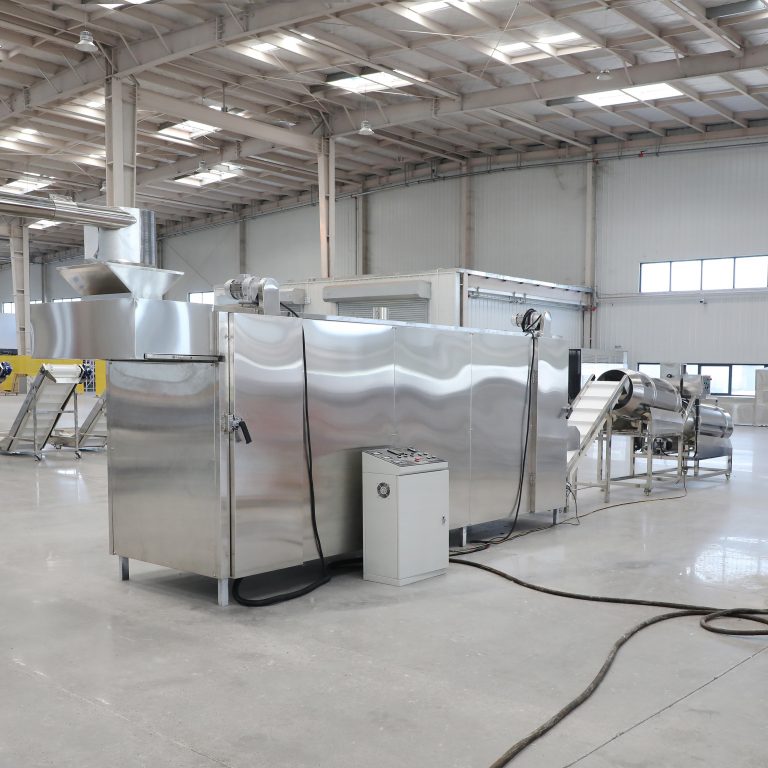
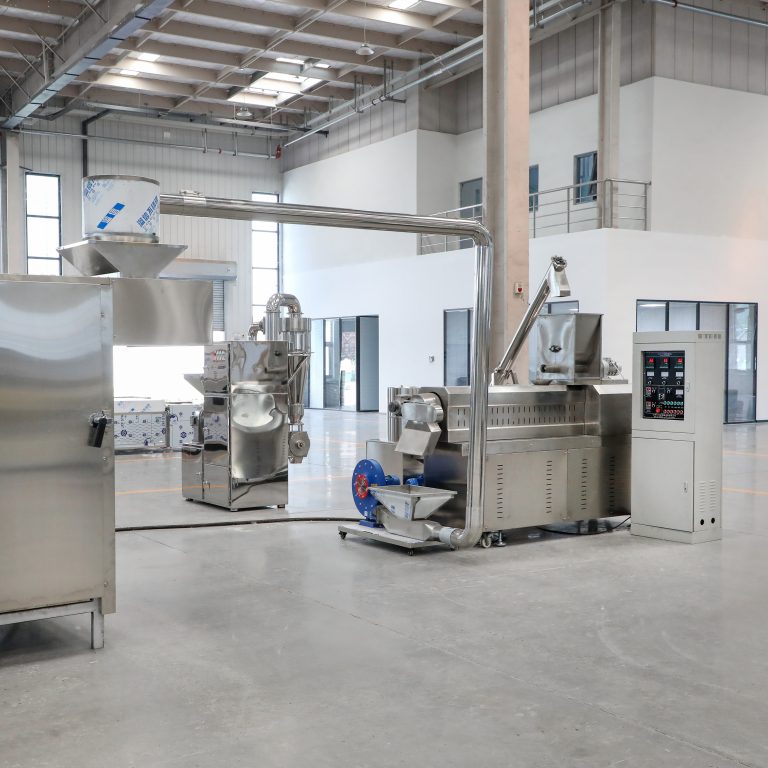
For a complete snack route, review ZEKO’s puffed snack production line and industrial hot-air and steam dryer.
8. What to verify during factory acceptance
- Run the oven with an agreed representative product and incoming moisture.
- Record wet feed rate, residence time, zone temperatures and final moisture.
- Inspect colour, texture, expansion, breakage and moisture uniformity.
- Record energy use under stable conditions using the agreed basis.
- Check fan operation, airflow, exhaust, temperature controls and alarms.
- Confirm safety interlocks and shutdown sequence for the selected heat source.
- Record remaining installation requirements for power, gas, steam, water and exhaust connections.
9. Send these details before requesting a quotation
- Product photo or sample, raw materials and target piece size
- Wet output, inlet moisture and target final moisture
- Available electricity, gas type and pressure, or steam pressure and spare capacity
- Factory layout, ceiling height, exhaust route and local safety requirements
- Expected operating hours and production shifts
- Need for future capacity expansion or additional product types
- Destination country and required electrical standards
With these inputs, ZEKO can compare the drying process as part of a complete line rather than recommend a heat source from a generic list. Use the project proposal form to share your product, capacity and available utilities.
Conclusion
Choose electric, gas or steam from the actual factory conditions and product duty. The best option is the one that can deliver stable product quality, continuous capacity, safe installation and transparent operating cost for the whole project—not merely the lowest initial machine price.
Technical references
Continue Reading