Technical Article
Food Extrusion Line Capacity: 5 Numbers to Confirm Before a Quote
When a buyer asks for a “500 kg/h extrusion line,” I normally stop before talking about screw diameter or motor power. The first question is simpler: 500 kg/h measured where?
On the same project, that figure can refer to material entering the dryer, finished product leaving the line, or a packaging machine’s nominal output. If those are mixed together, a quotation can look sensible on paper and still create a mismatch during commissioning.
This is the short capacity checklist we use before turning an initial enquiry into a line layout.
1. State whether capacity means wet product or finished product
For a dried extruded snack, the most useful reference is usually finished product at the agreed final moisture. The dryer, conveyors and cooling section still need to handle a higher wet-product flow upstream.
Here is a simple example. If a line is specified for 500 kg/h finished product at 8% moisture, it contains 460 kg/h of dry solids. If the product enters the final drying stage at 16% moisture, the same dry solids represent about 548 kg/h of product. That dryer stage is therefore removing roughly 48 kg/h of water—not an abstract “500 kg/h” duty.
The exact numbers vary with the recipe and process. The point is to put the moisture basis beside the capacity number from the beginning.
2. Separate extruder output, dryer throughput and packing speed
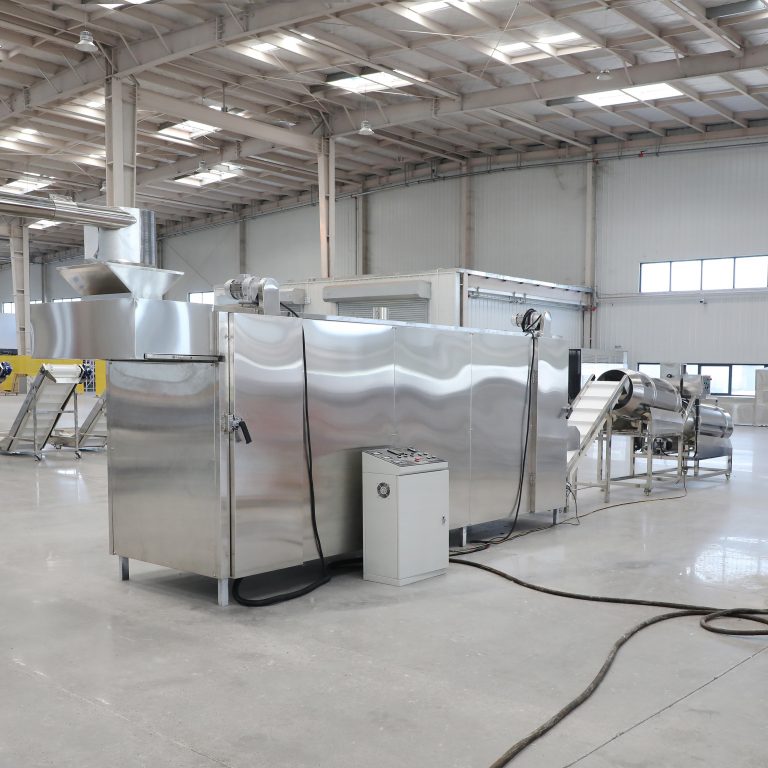
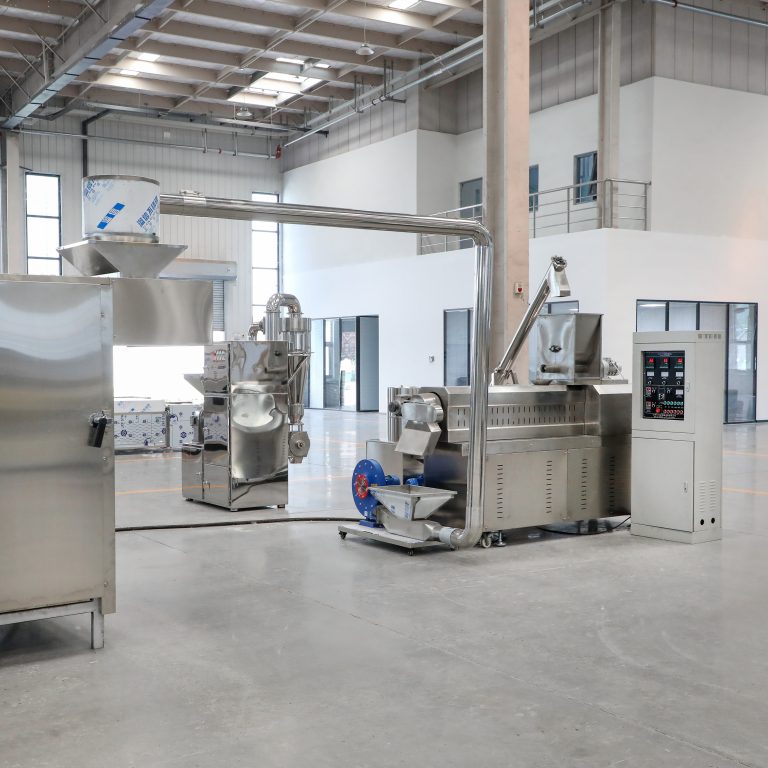
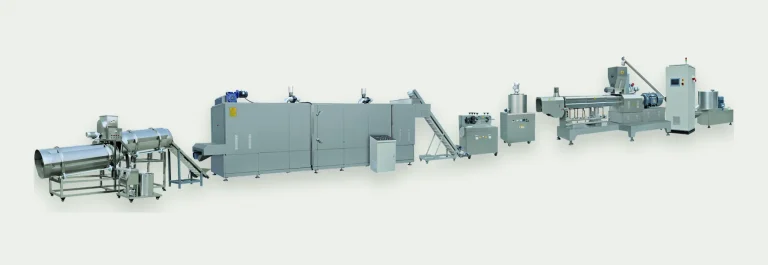
An extrusion line is a chain of machines, not one number on a nameplate. The extruder may be mechanically capable of a certain output, while the drying section is sized around moisture removal and residence time. Packaging is another calculation again: bag size, weigh range, number of lanes and target bags per minute all matter.
A good brief avoids wording such as “the packing machine should match the 500 kg/h line.” Instead, it gives the pack size and expected pack rate. For example, 500 kg/h packed in 50 g bags is 10,000 bags per hour before allowing for normal stoppages and variation. That is a very different packaging discussion from 500 kg/h in 500 g bags.
3. Give the product form, not only the product name
“Puffed snack” is not enough information for capacity planning. Rings, balls, curls, pillow snacks and filled snacks do not behave the same way in conveying, drying or cooling. Diameter, wall thickness, bulk density and whether the product is cut at the die all affect practical throughput.
For pet food and fish feed, pellet diameter and floating or sinking behaviour are equally important. A 1–3 mm floating feed project should not be quoted using the same assumptions as a large 8–10 mm pet-food kibble line.
4. Ask for the operating pattern
A capacity figure can be an hourly peak, a stable running average or an annual planning number. Those are not interchangeable. Before a layout is fixed, we ask how many shifts will run, whether several recipes are planned, and how often the line will change product or pack size.
That information influences hopper volume, buffer conveyors, cleaning access and how much flexibility is reasonable to build into the line. It also keeps the quotation honest: a line designed for one steady product is usually different from a line expected to switch between three shapes every day.
5. Include utilities and factory constraints early
Capacity is only useful if the factory can support it. The basic list is power supply, fuel or steam availability, compressed air, water, ceiling height, access doors and usable floor area. For a drying project, air handling and exhaust arrangements are part of the line discussion rather than an afterthought.
We have seen early layouts change simply because a dryer needed a clearer service route or because the available power supply changed the heating choice. Catching that before equipment is built is far cheaper than correcting it later.
A practical capacity brief to send with an enquiry
- Product and formula type: cereal snack, filled snack, pet food, fish feed or another product.
- Shape and dimensions: for example, ring, ball, pillow, flake or pellet diameter.
- Target capacity, clearly marked as wet feed rate or finished-product rate.
- Start and final moisture targets where drying is involved.
- Expected running hours, number of recipes and planned changeovers.
- Pack format and target bag weight if packaging is included.
- Available power, fuel or steam, compressed air, factory dimensions and delivery country.
With those seven points, an equipment supplier can move from a generic machine list to a usable process conversation. The final line configuration should still be confirmed against the actual product, trial results and local factory conditions, but the quotation starts on the right basis.
Questions buyers often ask
Is finished-product capacity always the best number to use?
For a dried or expanded product, it is usually the clearest commercial reference. The upstream wet-product rate and dryer moisture duty should then be calculated separately so each section is correctly sized.
Can one capacity number cover both the extrusion line and packaging machine?
Not on its own. The line rate should be converted into pack weight and bags per minute, with reasonable allowance for product flow, weighing and normal production interruptions.
What should be confirmed before a final capacity guarantee?
The recipe, product geometry, moisture target, operating conditions, utilities and trial evidence should be reviewed together before a final specification or guarantee is agreed.
Written by Alex Sun. This guide is for early engineering discussion; it is not a substitute for product trials or a final equipment specification.
Related planning resources
- Twin-screw food extruder options for cereal snacks, pet food and feed applications.
- Puffed snack production line overview for product-flow and drying discussions.
- Hot-air expanded snack production line guide for non-fried products where die expansion and dryer duty must be matched.
- Automatic food packing and packaging machines for translating kg/h into practical pack formats.
- Request a production-line proposal when the product, capacity and factory conditions are ready to discuss.
Continue Reading