Technical Article
Food Extruder Machine Applications for Snacks, Pet Food & Feed
Looking for production equipment? Review the ZEKO food extruder machine models, complete-line scope, capacity planning and quotation requirements.
A food extruder machine is often described as if it were one universal piece of equipment. In practice, the same twin-screw principle can be used for puffed snacks, breakfast cereal, dry pet food, fish feed and selected nutrition products, but the finished product decides the process.
This is important when a buyer asks for a machine that can “make everything.” A flexible platform can support several product routes, yet the screw arrangement, die, cutter, moisture control and downstream equipment still need to be selected around the actual formula and product target. The useful question is not simply what a food extruder can make. It is what conditions are required to make each product consistently.
One food extruder machine, different production routes
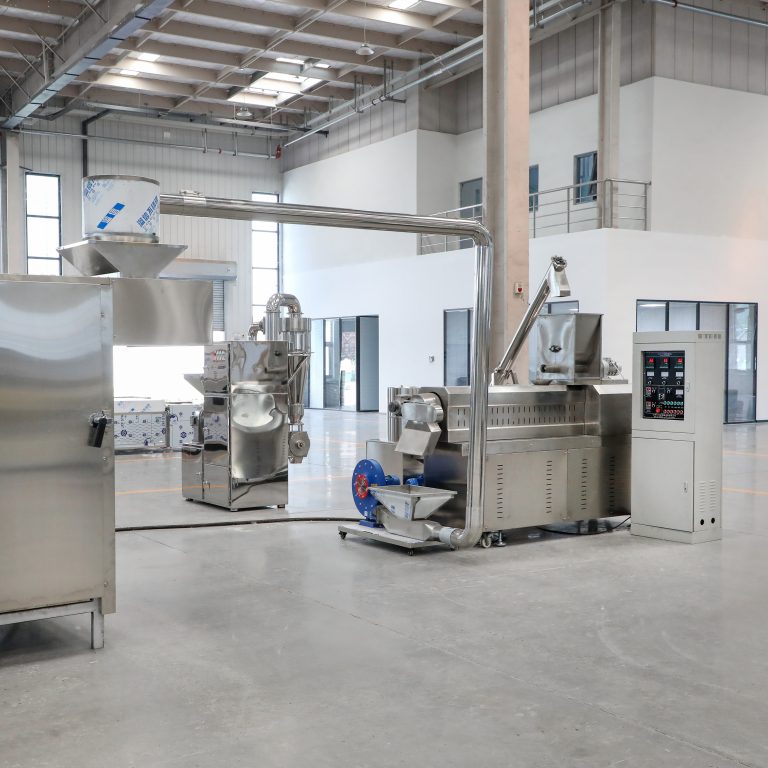
A twin-screw food extruder machine cooks and works material under controlled pressure before it reaches the die. The die creates the profile, and the cutter or downstream handling turns that profile into the intended product. That basic sequence is familiar across many food and feed projects. What changes is the material behavior and the process after extrusion.
For some products, the goal is direct expansion at the die. For others, density, pellet integrity, coating, drying time or water stability matters more than expansion. Treating those routes as identical is where many early equipment discussions go wrong.
Directly expanded snacks: structure and texture come first
In a puffed snack production line, buyers may be developing sticks, curls, balls, rings, cereal shapes or another directly expanded format. The extrusion stage is closely connected to the target texture, expansion, shape and cut length.
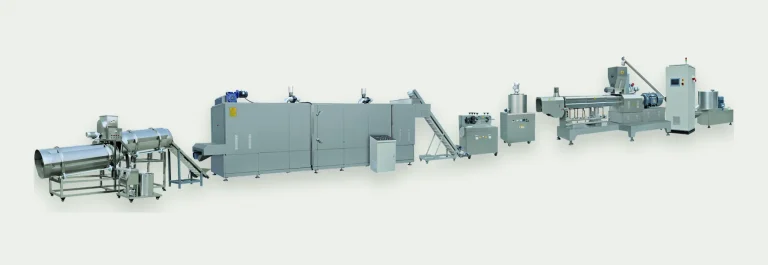
The practical discussion usually includes the flour or starch base, target moisture, die shape, cutter arrangement and how the product will be dried and seasoned. The dryer is not an accessory selected at the end. It must remove moisture at the same practical load created by the extruder. If drying or cooling is not matched, the line may not reach the expected finished-product condition even when extrusion itself looks stable.
Product photos, a target shape and an honest description of the intended texture are therefore more useful than a request for a model number alone. For non-fried products, the relationship between die expansion and hot-air drying should be part of the first process discussion.
Breakfast cereal: shape is only part of the job
A breakfast cereal production line can make rings, balls, flakes, filled formats and other shapes. Some are directly expanded; others require a different sequence after extrusion. A cereal project should define the target product clearly before equipment is selected, especially where a later drying, toasting, coating or flaking step changes the route.
Raw materials, recipe behavior, product density and the required surface finish all affect the configuration. A die that creates the correct visible shape does not by itself confirm that the product will have the expected texture or final moisture after the rest of the line.
That is why a cereal enquiry should include the product sample or image, ingredient categories, finished size, required hourly output and the intended post-extrusion process. These details make it possible to separate a directly expanded cereal discussion from a flake or formed-cereal discussion. For extruded and flaked products, review the corn flakes production line process before comparing equipment scope.
Dry pet food: extrusion must be matched to drying and coating
A dry pet food line uses extrusion to cook and shape kibble, but a commercial kibble result also depends on controlled drying, cooling and post-drying coating. Kibble diameter, density and formula are not merely sales details. They influence die selection, cutter settings, drying load and the behavior of the product after coating.
For this reason, pet food buyers should distinguish dry extruded kibble from fresh meat strips, jerky-style treats, canned food or retort products. Those products use different forming and preservation routes. Calling every product a “pet food machine” can hide an important process difference.
When assessing a pet food extruder, define the intended kibble size and shape, the main formula category, the target finished output, the moisture target and whether oil or palatant coating is required. The answer affects the complete line, not just the extruder.
Fish feed: pellet behavior changes the selection basis
A fish feed production line adds another variable: the pellet must meet the intended floating, slow-sinking or sinking behavior. Pellet diameter, raw-material preparation, formula, die, cutter, extrusion conditions and drying all influence density and water stability.
Two pellets with the same diameter may require different process control if one must float and the other must sink. A fish feed project should therefore state the species or feed type, pellet size range and target behavior from the beginning. It is not enough to say “fish feed” and choose a die later.
The supplier can then discuss the matching screw configuration, die and cutter arrangement, plus the drying and cooling conditions needed to protect pellet integrity before packing.
Capacity still needs a finished-product basis
Across all these applications, the capacity question is the same: what does the quoted number represent? Wet feed, extruder discharge and finished saleable product are different points in the process. The complete line should be compared on the same basis.
Before comparing proposals, review the food extrusion line capacity checklist. It helps separate headline output from the actual drying, cooling and packing load. This is particularly useful when one supplier quotes a machine while another quotes a complete line.
What to send with an application enquiry
A clear enquiry gives the supplier enough information to discuss a real configuration. It should normally include:
- A product photo, sample or clear description of the final product
- Main raw-material categories or formula type
- Required shape, diameter or cut length
- Target output and whether it means wet feed or finished product
- Initial and target moisture where relevant
- Existing equipment, if the request is for a stand-alone machine
- Factory voltage, available heat source and workshop dimensions
- Whether drying, seasoning, coating, cooling or packing are needed
With these details, the discussion can move from a generic food extruder machine to a configuration that fits the product route. The food extruder machine buyer guide explains how to compare the resulting proposals before you decide.
The practical takeaway
Food extrusion is a versatile process, but versatility does not mean a single unchanging setup. Snacks prioritize expansion and texture. Cereal may require a specific post-extrusion route. Pet food needs the drying, cooling and coating system to match the kibble. Fish feed adds pellet density and water stability.
Start with the finished product, then define capacity, utilities and scope. That gives you a much better basis for deciding whether you need a stand-alone food extruder machine or a complete line with the required downstream equipment.
Frequently asked questions
Can one food extruder machine make both snacks and pet food?
A twin-screw platform may be evaluated for several product routes, but formula, die, cutter, settings and downstream equipment need to be selected for each target product. The final configuration should not be assumed from one product to another.
Is a food extruder the same as a complete production line?
No. The extruder is the core cooking and shaping section. A complete line may also include feeding, conveying, drying, seasoning or coating, cooling and packing connections. The supply boundary should be clear in the quotation.
Why must the dryer be considered with the extruder?
The dryer must remove moisture at the same practical rate as the extruder produces product. If the two sections are not matched, the finished-product output or condition can be limited by drying rather than extrusion.
Download the Food Extruder Buyer Guide
Use this printable technical checklist to compare product route, complete-line scope, capacity basis, utilities and factory acceptance conditions before requesting a food extruder quotation.
Continue Reading