
Technical Article
Puffed Snack Production Line: 6 Inputs to Confirm Before You Plan Your Factory Layout
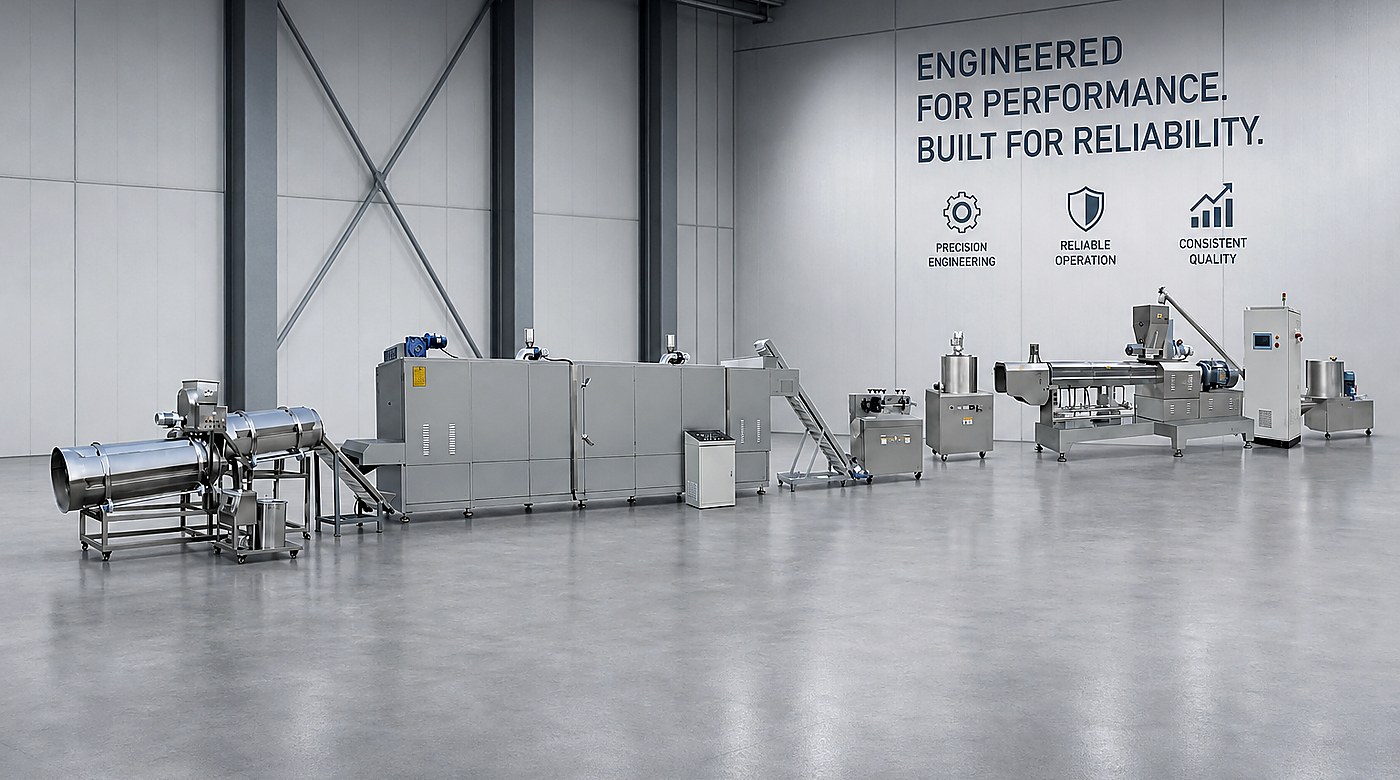
A puffed snack production line layout should begin with the finished product and factory conditions—not with an extruder model number. A line can look complete on a quotation yet still lose capacity when drying, cooling, seasoning, transfer or packing does not match the practical output from extrusion.
This checklist helps buyers prepare the information needed to plan a direct-expanded snack line for corn puffs, curls, balls, rings, sticks and similar cereal-based snacks. For the full equipment route, see our puffed snack production line.
1. Define the accepted product, not only the snack shape
Start with product photos, dimensions, target bulk density, required crispness, flavouring method and final pack weight. Two products with a similar visual shape can need different die geometry, cutting, drying time and handling conditions. The relevant output is accepted packed product per operating hour, after breakage, moisture control and seasoning—not only the kilograms shown at the extruder discharge.
- Product shape, dimension and reference photos
- Raw-material categories and expected formula range
- Target final moisture and texture expectation
- Oil, powder or slurry seasoning requirement
- Pack size and permitted product breakage
2. Confirm the capacity basis before sizing equipment
A request for “200 kg/h” needs a clear basis. Is that dry raw-material feed, fresh product after extrusion, or saleable packed snacks? The feeder, extruder, dryer, cooling conveyor and packing section should be balanced against the same capacity basis. If one section is slower, the whole line will operate at that section’s practical rate.
Use our food extrusion line capacity planning guide to separate theoretical extrusion output from accepted output at packing. This makes it easier to compare two quotations on the same basis.
3. Plan the factory layout around product flow
Material should move through the workshop without unnecessary manual transfer or product waiting. A typical route is raw-material receiving, mixing, controlled feeding, extrusion, drying, cooling, seasoning, buffering and packing. Leave space for operators, sanitation, die changes, maintenance access and packaging-material handling.
| Layout input | Why it matters |
|---|---|
| Workshop length, width and clear height | Determines conveyor routing, dryer arrangement and maintenance access. |
| Column positions and doors | Can limit line orientation, container loading and equipment installation. |
| Raw-material and finished-goods routes | Helps avoid crossing traffic and unnecessary handling. |
| Local voltage and available power | Defines motor, control and heating design requirements. |
| Heat source and exhaust route | Directly affects dryer selection, safety planning and utility scope. |
4. Match extrusion and drying as one production system
The extruder develops the expanded structure, while the dryer stabilizes the product for coating and packing. An undersized dryer forces a reduction in extruder rate; an oversized dryer cannot correct unstable feeding or an unsuitable formula. The product loading, residence time, air condition and final moisture target should be evaluated together.
For dryer selection, compare the product’s moisture-removal duty and line capacity with the available factory utilities. The industrial hot-air and steam dryer page explains the equipment role; our guide to sizing a snack drying oven after extrusion covers the project questions in more detail.
5. Do not leave seasoning and packing until the end
Expanded snacks are fragile. Product transfer, cooling, oil pickup, powder application, buffer design and the interface to packing determine both appearance and saleable yield. Confirm whether the project requires a complete line through packing or a defined interface to an existing packer. Bag dimensions, target speed and weighing method should be known before the final layout is drawn.
6. Send a usable project brief before asking for a quotation
A good quotation starts with a good project brief. Sending the details below helps the supplier select the line configuration and identify questions before manufacturing begins:
- Product photos, shape, size and planned pack weight
- Ingredient categories and known formula restrictions
- Required saleable output per hour and planned operating schedule
- Workshop drawing, clear height, doors and column locations
- Voltage, heat source, compressed air and exhaust conditions
- Required level of automation and packaging scope
- Destination country and any required standards or documentation
Prepare for trials and factory acceptance
For a new product, agree on the trial raw materials, acceptance samples, output calculation and test duration in advance. A useful factory acceptance test checks stable accepted product across the connected system, rather than only a brief no-load machine run. Use the food production line FAT checklist when defining the test.
Plan a puffed snack line around the real factory objective
ZEKO evaluates feeding, twin-screw extrusion, drying, cooling, seasoning and packing as a connected system. Send your snack photos, output target and factory information, and we will help define a practical production-line proposal.
Continue Reading