Technical Article
Breakfast Cereal Production Line: 7 Planning Checks Before You Compare Quotes
A breakfast cereal production line is not selected by extruder size alone. The cereal shape, formula, coating, drying profile, product density and packing format all determine whether the finished product can run consistently at the planned saleable output.
This guide gives buyers seven practical checks to complete before comparing breakfast cereal production line quotations. For the core equipment route, see ZEKO’s breakfast cereal production line page.
1. Define the finished cereal before selecting the process
Rings, balls, flakes, pillows and coated cereal pieces do not all use the same process route. Directly expanded cereal normally leaves the die close to its final shape, while corn flakes require cooking, forming, conditioning, roller flaking, drying and toasting. Start with product photos, dimensions, texture, target density and whether the cereal will be coated.
When the target is a flaked product rather than an expanded ring or ball, review the separate corn flakes processing line route before assuming the same equipment will apply.
2. Confirm the raw-material and formula boundary
Corn, rice, wheat and blended cereal flours can behave differently in mixing, extrusion, expansion and drying. Sugar, fibre, protein ingredients, cocoa or inclusions can also change the cooking response and final texture. The equipment supplier needs the ingredient categories, not necessarily a confidential formula, to define feeding, screw configuration, die design and dryer duty.
3. Map the complete process, not just the extruder
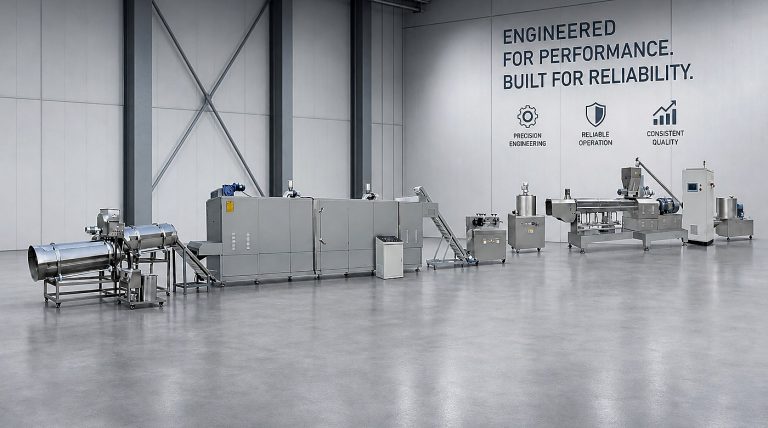
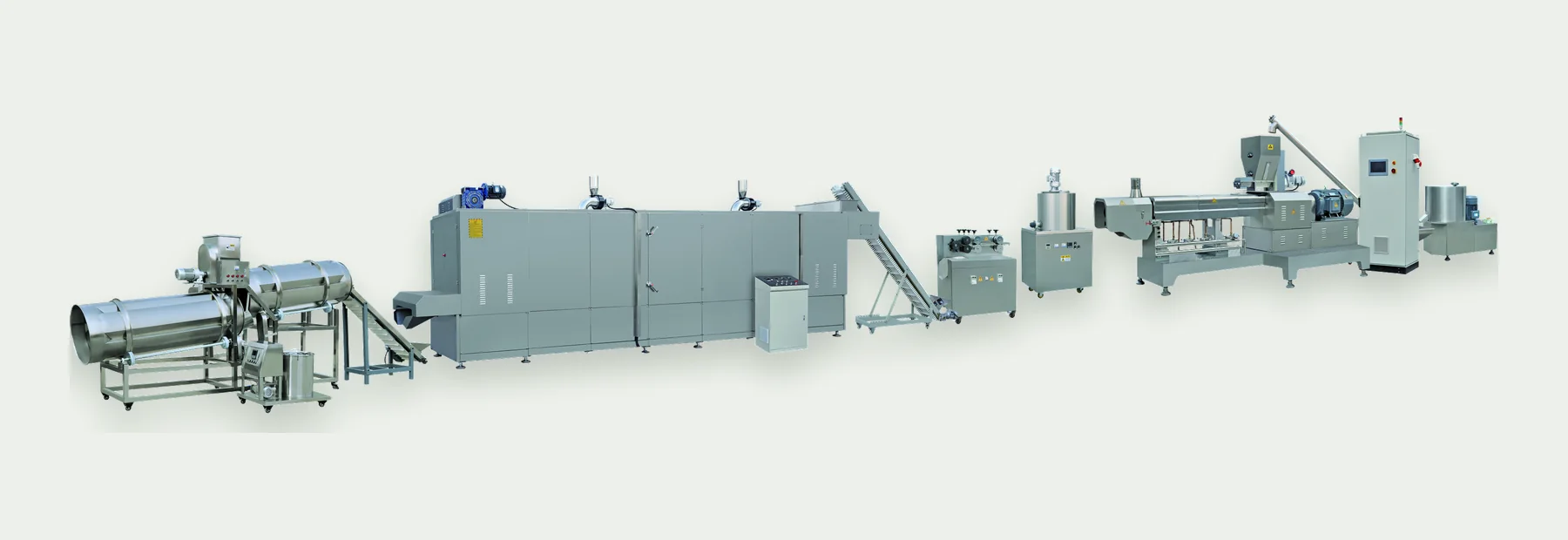
A typical cereal line may include ingredient handling, mixing, twin-screw extrusion, die shaping, cutting, initial drying, optional coating, final drying, cooling and packing. Each stage needs to match the next one. The twin-screw food extruder provides cooking and forming, but it does not replace the drying, coating, cooling or packing sections needed for the final product.
| Process question | Why buyers should confirm it |
|---|---|
| Product shape and density | Guides die, cutter and the likely drying load |
| Coated or uncoated product | Determines whether syrup preparation, coating and secondary drying are needed |
| Target saleable output | Balances extrusion with drying, cooling and packing capacity |
| Final moisture and crispness | Defines the drying and cooling target before packing |
| Package size and speed | Sets the packing configuration and buffer requirement |
4. Use one capacity basis across the line
Do not compare an extruder nameplate with a finished-product target as if they are the same number. The practical rate depends on formula, product density, moisture removal, coating load, cooling time, changeovers and the packing section. Define the capacity basis as saleable finished cereal per hour, then check each linked stage against it.
Use ZEKO’s food extrusion line capacity planning guide to prepare the calculation inputs before requesting a quotation.
5. Plan coating, drying and cooling as one quality-control section
Coated cereal may need a second drying stage after syrup or flavour application. The material must reach the required final moisture and cool sufficiently before it enters a weigher or bagging machine. If coating is planned later, the first dryer, conveyor layout and cooling section can become the production bottleneck.
6. Define the packing interface early
Light cereal rings, flakes and coated pieces can be fragile. Product temperature, bulk density, breakage limit, target bag weight and required packs per minute should be defined before the packaging section is selected. This prevents a cereal line from producing finished product faster than it can be weighed and packed.
For this downstream decision, read the cereal packaging machine selection guide.
7. Agree the factory acceptance evidence before production
A useful factory acceptance test records the representative cereal or agreed substitute, product dimensions, output basis, moisture or texture checks, coating requirement, equipment included in the scope and unresolved items before shipment. This is more useful than accepting a line only because each machine turns on.
The food production line FAT checklist helps buyers define this evidence before the project is built.
What to send for a breakfast cereal line quotation
- Finished cereal photos, shapes, dimensions and coating requirement
- Main cereal ingredients and any important formula constraints
- Required saleable output per hour
- Target final moisture, texture and product density
- Package formats, net weights and packing-speed target
- Factory voltage, available heat source and workshop layout
ZEKO can match the extrusion, drying, coating, cooling and packing scope to the actual breakfast cereal product. Send a breakfast cereal project brief for a configuration discussion.
Continue Reading