Technical Article
Food Extruder Machine Price: 10 Factors Before Comparing Quotes
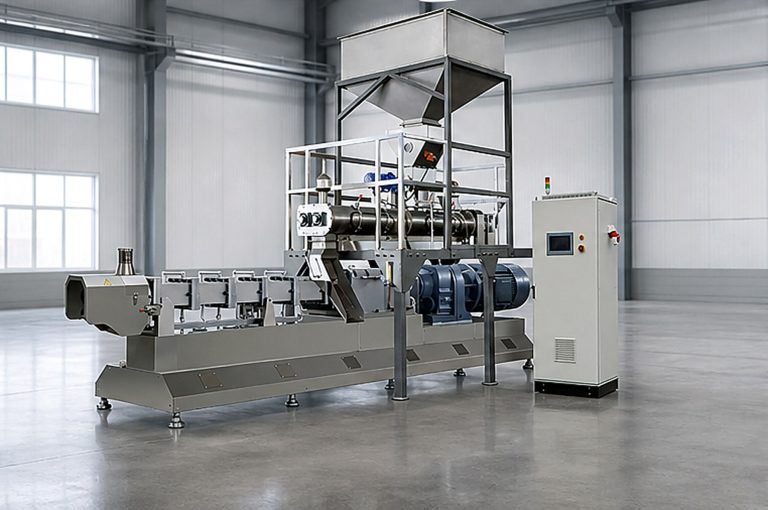
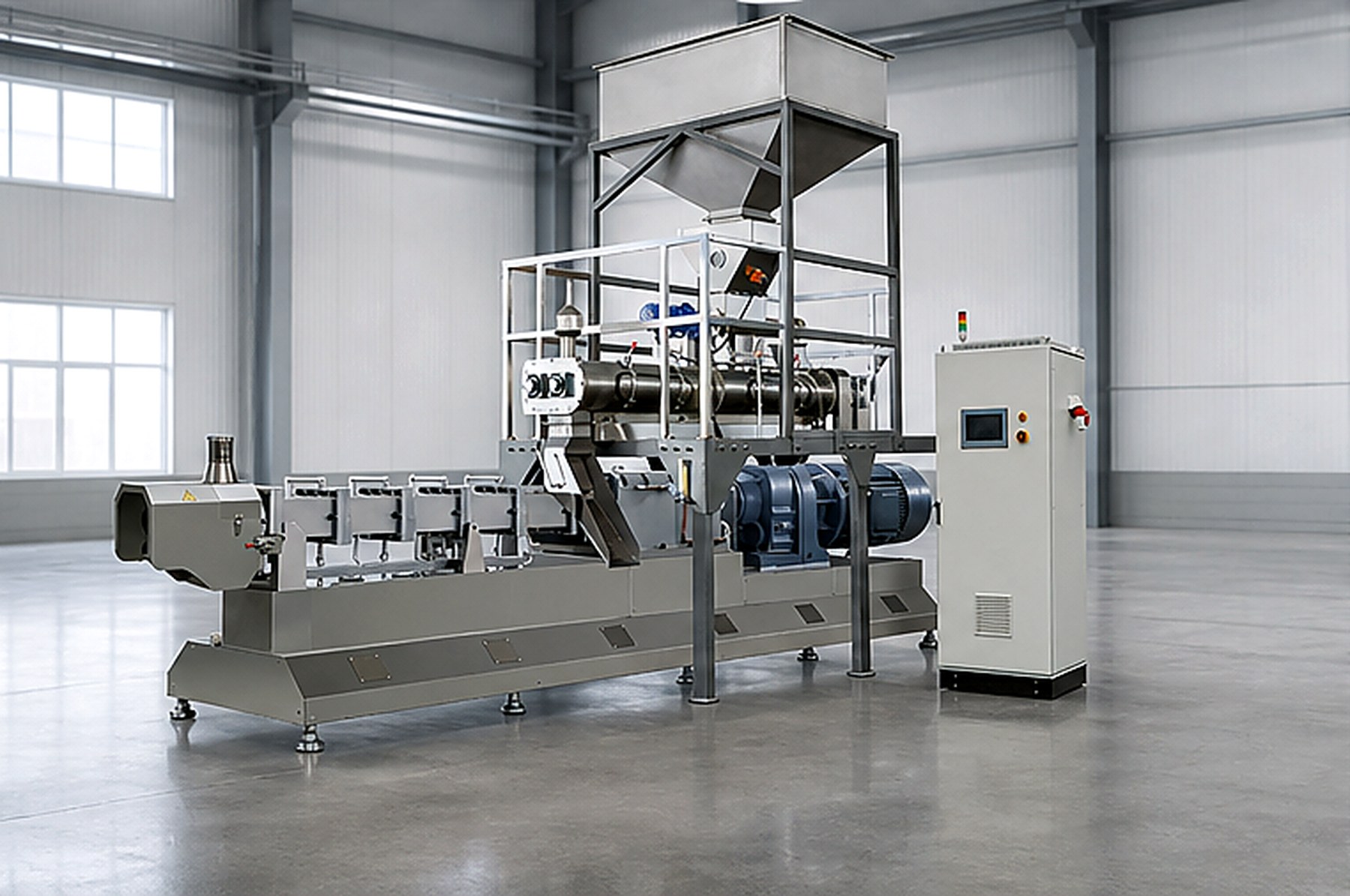
Food extruder machine prices cannot be compared reliably from a model name alone. Two quotations may both describe a twin-screw food extruder, yet include different feeding systems, screw configurations, dies, controls, dryers and commissioning services.
This guide explains the cost factors buyers should define before requesting or comparing a quotation. It does not give a universal price range because the correct machine and line scope depend on the product, recipe, target output and local operating conditions.
Quick answer: the largest price differences usually come from the required process, verified capacity, extruder configuration, forming system, downstream equipment, automation level, construction standard and project services.
1. Start with the product, not the extruder model
Direct-expanded snacks, breakfast cereal, pet food, fish feed and textured protein do not use identical process conditions. The supplier needs the raw materials, target shape, density, moisture, texture and final use. These inputs influence the screw profile, barrel arrangement, die, cutter, preconditioning and downstream equipment.
See our food extruder machine applications guide for the main application differences.
2. Stand-alone extruder or complete production line
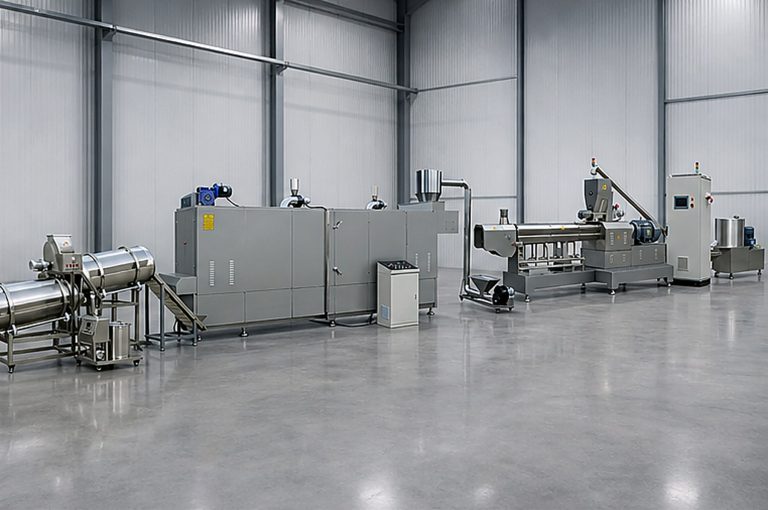
A common mistake is comparing a stand-alone extruder with a complete line. An extruder-only offer may exclude mixing, feeding, drying, seasoning, cooling and conveying.
| Scope | Typical items | Confirm |
|---|---|---|
| Extruder only | Main extruder, drive and controls | Feeder, die, cutter, commissioning |
| Extrusion section | Feeding, extrusion, die and cutting | Preconditioning and transfer |
| Complete line | Preparation, extrusion, drying or frying, flavouring and cooling | Utilities, installation boundary, packaging interface |
Ask every supplier to mark included, optional and excluded items. Use our extrusion line scope guide when comparing offers.
3. Capacity needs the same product basis
Nominal output is not universal. Throughput changes with formulation, moisture, die restriction, product size and expansion target. A useful quotation states the reference product, continuous output range, measurement point, moisture basis, utility assumptions and matched downstream capacity.
Review our food extruder capacity planning guide before choosing a model from a kg/h figure.
4. Screw, barrel and drive configuration
Price is affected by screw diameter, length-to-diameter ratio, motor and gearbox specification, barrel zoning, heating and cooling method, screw-element arrangement and wear-resistant materials. More configuration is not automatically better. The correct design should provide the mixing, cooking, pressure and product control required by the recipe.
5. Feeding and preconditioning
A quotation may include a simple dry feeder, or it may include gravimetric feeding, liquid dosing, steam or water addition and preconditioning. Specify which ingredients are powders, liquids, oils or minor additives and how accurately they must be dosed.
6. Dies, cutters and product changeovers
The die and cutter determine much of the final geometry. Confirm the number and material of dies, cutter type, speed control, included spare tooling, changeover time, cleaning access and future die lead time.
7. Dryer, fryer and downstream equipment
After extrusion, a product may need drying, frying, hot-air expansion, coating or cooling. Dryer sizing should follow inlet moisture, target final moisture, bed loading and residence time. An undersized dryer can limit a correctly selected extruder, so the full line should be capacity-balanced.
8. Materials, electrical standard and controls
Compare food-contact materials, frame and cover materials, surface finish, guarding, electrical components, voltage and frequency, control architecture, instruments, recipe storage and data functions. State local requirements before the final quote because changes after fabrication add cost and delay.
9. Testing, documentation and service
Confirm whether the price includes recipe trials, factory acceptance testing, manuals, electrical drawings, spares lists, installation supervision, commissioning and operator training. A proper factory acceptance test checklist defines the product, test duration, measurements and acceptance criteria.
10. Wear parts and operating cost
The lowest purchase price may not deliver the lowest long-term cost. Compare screw and barrel wear, dies, cutter blades, seals, heaters, bearings, energy demand, cleaning time, changeover loss and maintenance access. Request separate commissioning and normal-operation spares lists.
Quotation comparison checklist
| Item | Information to request | Purpose |
|---|---|---|
| Product basis | Recipe, shape, density and moisture | Confirms process relevance |
| Capacity | Continuous output and assumptions | Prevents nominal comparisons |
| Line boundary | Included, optional and excluded equipment | Makes scope comparable |
| Tooling | Dies, cutters and change parts | Shows what can be produced |
| Utilities | Power, water, steam, air and fuel | Supports factory planning |
| Testing | Material trial and FAT criteria | Reduces uncertainty |
| Service | Installation, training, warranty and spares | Clarifies total cost |
What to send for a useful quote
- Target product and reference photos or samples.
- Main raw materials and recipe information.
- Required output and operating hours.
- Target shape, size, density and final moisture.
- Preferred drying, frying or expansion route.
- Available electricity, steam, water, air and fuel.
- Factory space, location and local standards.
- Required line boundary and packaging interface.
- Trial, documentation, training and spares requirements.
Also read how to choose a food extruder machine and single-screw versus twin-screw food extruders.
Frequently asked questions
Why do food extruder quotations vary so much?
Machine configuration, capacity basis, tooling, downstream equipment, controls, materials and service scope may all differ. Compare the written technical scope, not only the headline price.
Can a supplier quote from capacity only?
A rough proposal may be possible, but reliable selection also needs the product, recipe, shape, moisture, process route, utilities and line boundary.
Should I buy an extruder first and add a dryer later?
It can work in some projects, but both sections should be engineered together so the dryer does not become the line bottleneck.
How can I compare two prices fairly?
Use the same project brief and capacity basis, then compare equipment, tooling, materials, utilities, testing, documentation, service and spares item by item.
Discuss your food extrusion project
ZEKO supplies twin-screw food extruder machines and complete solutions for snack, cereal, pet food and feed applications. Send your product, raw-material, capacity and utility information so the quotation scope can be checked item by item.
Continue Reading