Technical Article
Pet Food Extruder Machine: Kibble Line Guide
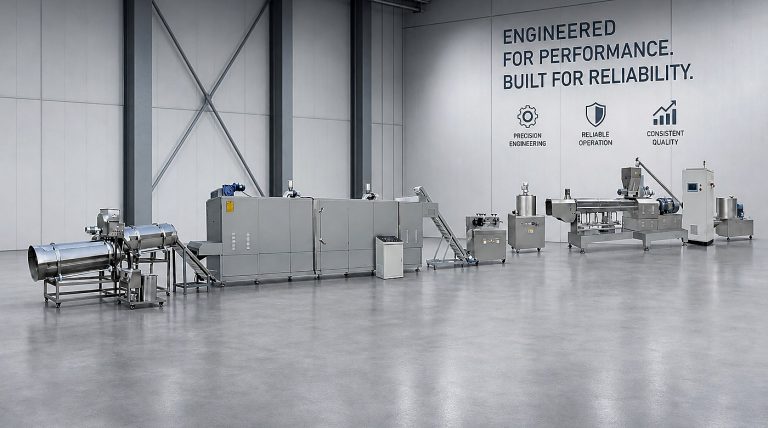
A pet food extruder is not a stand-alone answer to kibble production. A reliable dry-pet-food project is a matched system: ingredient preparation, metering, preconditioning, extrusion, drying, coating, cooling and packing must all work at the same practical output. This guide helps factory owners and project managers define that system before they compare equipment.
The dry kibble process: one line, not one machine
Dry kibble is commonly produced in a continuous route: ingredients are ground and batched, mixed and conditioned, formed through an extruder and die, then dried, cooled, coated and packed. The exact arrangement changes with the formula, product shape and regional operating conditions, but the operating principle is the same: each section supplies the next at a stable, controllable rate.
1. Grinding, batching and feeding
The production line begins before the extruder. Raw materials must be prepared to a particle size and batching accuracy appropriate for the formula. Changes in particle size distribution, moisture or ingredient flow can appear later as uneven mixing, unstable extruder loading or inconsistent kibble density.
For a factory that handles several formulas, the practical questions are usually more important than the headline capacity: How are minor ingredients added? Which materials bridge or segregate? How will wet additions be metered? How long does a recipe changeover take? A properly selected food screw conveyor and feeding system protects the stability of the downstream process.
2. Preconditioning: make the feed entering the extruder predictable
Preconditioning is where dry ingredients are mixed with controlled water, steam and, where suitable, additional liquid ingredients before extrusion. Its job is not simply to add moisture. It gives the material time to hydrate and mix more uniformly so the extruder receives a more consistent mass.
That consistency matters. If liquid addition is not well metered, the line may show fluctuating pressure, changing product size or density, and variable output. Formulas containing fresh or viscous additions need particular attention to mixing, dosing and cleanability. The preconditioner should therefore be selected together with the recipe and the extruder—not added as an afterthought.
3. Extrusion, die and cutting: define the product, not only the throughput
Inside the extruder, the material is conveyed, mixed, compressed and thermally processed before it exits through the die. The die and face-cutting arrangement influence kibble shape and size; process conditions and formula influence expansion, density and surface character.
For this reason, a quotation for a pet food extrusion line should describe the intended product range: kibble diameter, shape, density target, moisture range, formula family and required changeovers. “Pet food extruder” is a useful category term, but it is not a complete technical specification.
4. Drying and cooling: where a line often loses its real capacity
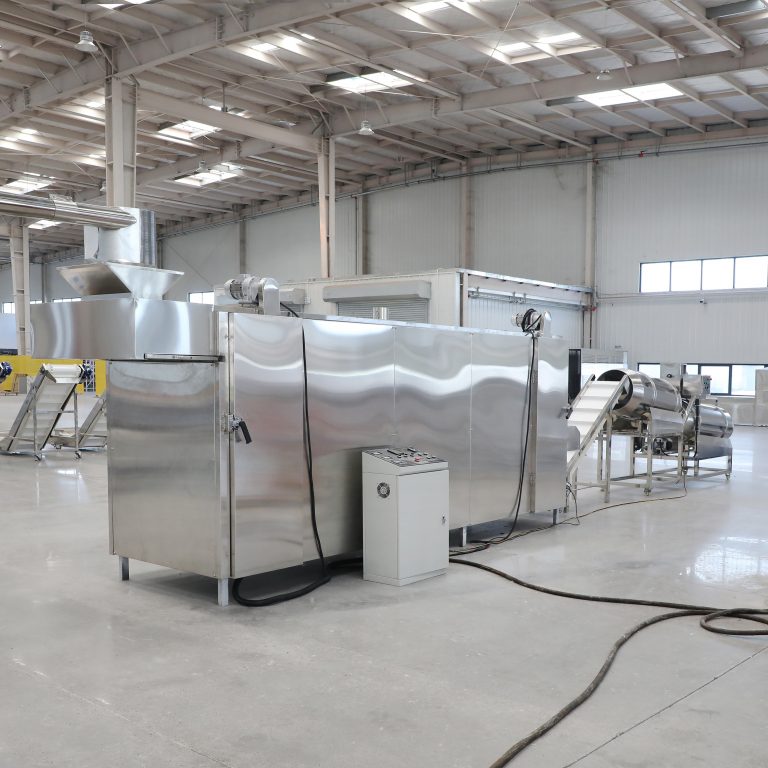
An extruder can produce continuously only if the dryer and cooler can accept, dry and release product at the same operating rhythm. Dryer residence time, air distribution, product bed loading and the required moisture endpoint all affect the practical output. If this section becomes a bottleneck, the factory does not achieve the capacity shown on the extruder nameplate.
Drying should be discussed early, especially where the project has limited floor space, variable ambient conditions or multiple product sizes. ZEKO’s hot-air and steam drying options can be evaluated as part of the full line configuration rather than as an isolated accessory.
5. Coating and packing: protect the finished product
After drying and cooling, a coating system may apply oils, palatants or other post-extrusion additions. Coating performance depends on product temperature, surface condition, dosing accuracy and the selected application method. It should be designed with the final recipe and the product’s handling requirements in mind.
Packaging is the final production constraint. The packing section must keep pace with the approved line output while meeting the required bag formats, weighing accuracy and workflow. For projects that need a complete downstream scope, see ZEKO’s automatic food packaging machine options.
Five decisions that should be made before selecting a pet food extruder machine
| Project input | Why it changes the equipment scope | What to clarify |
|---|---|---|
| Formula family | Changes mixing, conditioning, screw and liquid-addition requirements. | Dry ingredients, wet additions, oil level, sensitivity to segregation. |
| Kibble range | Changes die, cutter, conveying, dryer loading and changeover needs. | Diameter, shape, density, product mix and future SKUs. |
| Saleable output | Sets the line balance, not just extruder size. | Target kg/h after drying, coating, cooling and packing. |
| Factory utilities | Determines whether the configuration can operate as designed. | Electrical supply, steam, water, compressed air, ventilation and drainage. |
| Quality plan | Defines what must be demonstrated before shipment and commissioning. | Product samples, test conditions, acceptance criteria and documents. |
Use saleable output instead of a nameplate number
Capacity planning should follow the product through the entire line. A useful capacity discussion separates three ideas:
- Extruder discharge: what leaves the forming section under a given formula and operating condition.
- Line throughput: what the dryer, cooler, coating and conveying system can process continuously.
- Saleable output: what reaches packing within the agreed product specification.
This is why ZEKO treats line configuration as a project decision, not a catalog-only selection. Our guide to food extrusion line capacity planning explains how to compare process capacity with the output a factory can actually ship.
Common project mistakes—and how to avoid them
Buying around the extruder alone
A powerful extruder cannot compensate for an undersized dryer, slow coating drum, limited cooling area or manual packing bottleneck. Ask for a line balance showing each main section and its expected operating range.
Using one generic formula for equipment acceptance
Equipment trials should be based on representative ingredients and agreed finished-product criteria. If several recipes are planned, identify the primary production recipe and the most demanding one before the quotation is finalized.
Leaving utilities and layout until the end
Steam availability, electrical supply, drain positions, ventilation and maintenance access affect the selected configuration. Confirming them early prevents expensive late changes in both equipment and factory layout.
Measuring only kilograms per hour
Output must be assessed with product quality, reject handling, changeovers and packaging in view. A stable line that repeatedly makes in-spec product is more valuable than a nominal capacity that cannot be sustained.
What a useful proposal should include
When you compare pet food extrusion proposals, request more than an equipment list. A useful project proposal should identify the proposed process flow, product assumptions, reference capacity basis, utility requirements, main machine scope, optional sections, layout information, trial expectations and service boundaries. It should also make clear which items depend on final recipe confirmation.
That format lets a buyer compare like with like—and it gives both sides a practical basis for factory testing and commissioning.
Plan the full kibble line with ZEKO
ZEKO configures food-processing equipment around the actual product and project conditions. Tell us the formula family, target kibble range, required saleable output, plant location and available utilities. We will help you define a practical process scope before you commit to a line.
Start a Pet Food Line Project Brief
Technical references
Continue Reading